Great expectations

In the spirit of honesty, upon which this blog is built, I confess that I spent the first hour or two of my 41st birthday – on Tuesday just gone – in my pyjamas, in my bed and in tears. The sadness started to creep up on me on Monday evening. I tried to avoid it with some obsessive worrying late into the night about things that really didn’t need worrying about. But by my birthday morning, there was nothing I could do but give in to it. Phone calls from family and friends interrupted my tears at frequent intervals and I shared some laughs with everyone who called. But I also shared my sadness. As soon as their tuneful rendition of “Happy Birthday to You” was over and they asked me how I was doing, I told them I was feeling blue. That was my truth. And everyone understood.

So why was I feeling glum? After all, things are good. Work is varied and interesting and arrives in my inbox just when I’m wondering where the money is going to come from next. My flat is pretty, sunny and homely. I have my health, as does my family. And I have plenty of fabulous friends – a few of which I was due to see on my birthday at the movies and at dinner (and I did, and had a lovely time, without any tears).

I initially assumed my sadness was to do with the whole baby thing. As any woman my age who feels she might like to have children will know, every birthday after 40 carries great significance. Despite the miracle baby stories we’re constantly told – “Oh, I knew someone who gave birth to a perfectly healthy baby at 45,” or 46 or 47, insert what ever age you like – it’s impossible not to see the window of opportunity closing with the passage of time. And it’s difficult not to grieve, even if we still have time and hope.

But while the baby thing obviously had something to do with my sadness, I realised, on reflection, that it was less specific than that – it was more to do with the big picture. It was to do with my expectations of where I thought I would be or should be at this age. As lovely as my life is (when I remember to appreciate it), I did not expect it to look anything like it does at this age. I didn’t expect, on my 41st birthday, to be talking to my Mum from the silence, stillness and aloneness of my one-bedroom flat in north London or to be pondering which way to turn in my career.

So what did I expect? Well, it might sound clichéd but I think I expected to be happily married, with children, living in a house with a garden. I also expected to be working in a high-powered, high-profile job reporting from global hotspots in the vein of CNN’s Christiane Amanpour or reading the BBC news like Fiona Bruce. Perhaps I expected to have a book published too. And of course I imagined by now I’d be baking regularly and wearing the latest fashions from Boden.

And where did those expectations come from? Well, I remember vividly having discussions with my childhood friends, around 15 or 16, about the exact age at which we’d get married and have children. I think my upper limit was 28. That seemed pretty reasonable at the time. Wrapped up in those discussions was a picture of what our lives would look like in the future and back then, 41 seemed positively ancient and very grown-up.

Hence the question I was asking myself on Tuesday morning: How on earth did I get this old? Where did all those years go? What happened to my 30s? And shouldn’t I be more grown-up by now (meaning responsible for a small person and not just myself)?

Expectations. They can be bad for your health and happiness. Having a fixed idea of how we want our lives to look and holding on to it tightly, rather than loosely, can lead to disappointment. Imagine if we didn’t expect anything from our lives. Imagine if we didn’t think about our future and how we’d like it to be. Imagine if we really did just live one day at a time and in a state of permanent thankfulness for our health or for simply being alive.

But then how to get the balance between aspiring to good things and taking appropriate action to move ourselves in the right direction whilst also not expecting so much that we end up disappointed? It’s a tricky one. If we always expected the worst – to be run over by the next bus, to contract an incurable disease, to lose all our friends and family to a natural disaster – we’d never leave the house or we’d walk around in a permanent state of glumness. It seems we need optimism to function and we’re programmed to look on the bright side, as explained in this Guardian article by neuroscientist Tali Sharot: The Optimism Bias, an idea I explored in a Psychologies Magazine article on optimism and pessimism a while back.

Personally, I don’t want to stop hoping for the best or dreaming about things I would like to come to pass. But as I’ve written about before on this blog, holding on tightly to outcomes and not allowing any room for manoeuvre is a path thwart with frustration and sadness. And by staring fixatedly at one particular outcome, we can often miss the beautiful opportunities that are waiting for us just beyond our blinkers. This year, I’d like to keep the blinkers off and to be more attune to my peripheral vision. As one of my birthday cards said: “Sometimes on the way to the dream, you get lost and find a better one.”

On the topic of birthday cards, I received another one with a quote from Chinese writer and inventor Lin Yutang, which said: “If you can spend a perfectly useless afternoon in a perfectly useless manner, you have learned how to live.”

That quote and card brought tears to my eyes (I have rather over-active tear glands – you may have noticed – and especially on birthdays), particularly because it came on the back of a hectic weekend at the Women of the World festival at the Southbank Centre. I had an amazing time at the festival and was there Thursday, Friday, Saturday and Sunday. I heard talks by inspiring, creative and funny women. I sat on a panel on body image and ageing. I networked. I was mentored and I mentored. I learned that my fear of success was far greater than my fear of failure and I was encouraged to seize life and its opportunities and to put my talents to full use.

But amidst all the inspiring talk, the most powerful message I heard and the one that touched me most was that sometimes we need to do less, not more, to achieve less, not more and to stop running, aspiring, striving, jumping and climbing. And that’s why that Lin Yutang quote, above a picture of two girls lying on a picnic rug in a meadow, brought tears to my eyes. Achievement means precious little if we can’t enjoy it, celebrate it and take some time out from it. Maybe sometimes we just need to say that’s enough for now. Maybe we need to put things on hold and hang out on a picnic rug in the sunshine.

I know I’m not going to stop working or trying and nor do I want to. I still have a drive and a desire to put my talents to good use. But maybe I can give up striving. Maybe I can sometimes take the easy way out instead of the path marked ‘struggle’. Maybe I can prioritise my free time over my work time and make sure I celebrate my successes.

So that’s my wish for myself this year and for anyone else who is prone to doing too much, achieving too much, striving too much or running too much: more fun, more laughter, more joy and more time spent on picnic rugs in the sunshine.

To quote from another greetings card that hangs in my bathroom: “How beautiful it is to do nothing and then rest afterwards.”


Posted in Self-Acceptance, Women | Tagged , , , , , , | 12 Comments

Woman

Today is International Women’s Day. Why? Well, you can read all about its origins here but in a nutshell, it began to be observed in the early 1900s as women demanded shorter hours, better pay, voting rights and equality with men. Today, on March 8 and throughout the month, events around the world celebrate the achievements of women and girls and highlight the many areas where inequality remains.

To quote from the International Women’s Day website: “The unfortunate fact is that women are still not paid equally to that of their male counterparts, women still are not present in equal numbers in business or politics, and globally women’s education, health and the violence against them is worse than that of men.”

There are 428 events in the UK this month to celebrate International Women’s Day and if you check the Internet today, you’ll find countless column inches dedicated to the cause. On The Huffington Post home page alone, there are blogs by Cherie Blair and David Cameron, amongst many others. Cherie Blair will also be speaking at an event later today at the Southbank Centre, part of the Women of the World festival that runs until Sunday. I’m looking forward to hearing her talk about mentoring – something close to my heart. I’m also excited to be taking part in the festival this year, as a panelist on Saturday on Body Politics, and I expect I’ll be there on Friday and Sunday too to listen to an array of fabulous female speakers, including Ruby Wax, Susie Orbach and Annie Lennox. That’s on top of two other women’s events I plan on attending today, followed by dinner with some great female friends this evening. If it were possible to overdose on inspiring women’s events (which, as a woman, I don’t think it is), I might be in danger of doing so by the end of this weekend.

But you might be wondering if I have a point to make on International Women’s Day. If I’m going to blog about violence against women, access to education in the developing world, pay discrepancies or the lack of representation of women in the upper echelons of business and politics. I feel passionately about all these causes. I’ve met women in Mozambique, in Haiti and in the UK who’ve suffered rape and violence. I’ve talked to and written about the women and girls in Africa and other parts of the developing world who don’t have access to education or healthcare. And during the six years I worked as a journalist in parliament, the under-representation of women, as well as the lack of ethnic diversity, were glaringly obvious. I also know from my own experience that many women struggle to demand their rights in the workplace, from equal pay to promotion, and that those who shout louder – generally the men – get what they want. Fortunately, I also know this can change and that we can teach ourselves to speak up for what we need.

But I’ve decided there are plenty of other people out there today writing about all these important and pressing topics, from Cherie Blair to David Cameron to Lynn Forester de Rothschild.

So instead, I’m going to write a brief Ode to woman, because today, as I stop and think about it, I love being a woman. I love the way I can talk to my girlfriends about anything and everything. I love the way we pour out our feelings to each other, support each other, cry on each other’s shoulder, hold hands to offer support or give big, long hugs when one of us is hurting. (Men – please don’t feel excluded, I know many of you can do all this too but I’m writing as a woman about women today!). I love our softness and gentleness but also our courage, boldness and resilience. I love our beauty, our elegance and our style. And I especially love how we laugh together.

A few weeks ago, I was stopped on my Vespa at a traffic light near Covent Garden and a number of women – obviously out on the town – were trying to cross the road. I say trying as they were stuck in that ‘should we cross, should we wait for the green man’ no man’s land – half of the group a few steps into the road and the other half on the pavement. As the lights changed, some decided to run, others decided to stay but all, in unison, shrieked and laughed as they tottered on their high heels to the other side of the road or retreated to the safe haven of the pavement they’d just left. I can’t explain why – was it the shrieks, the high-pitched giggles, the shouts of “run … no stay … no run” or the totally impractical footwear? – but in that moment I was reminded why I love being a woman (and I hardly ever wear high heels).

I was reminded again last week when I and a few other girlfriends went round to help a friend settle into her new home. We ate take-away curry, drank bucks fizz (I had a quarter of a glass), shared stories of men, work, food, bodies, loneliness, friendship and family. And we laughed and giggled. Sometimes, living on my own in London, I can feel lonely. But I only have to think about all my amazing female friends in this city, around the country and around the world and I no longer feel alone. In fact, I feel completely connected and totally surrounded by love and laughter.

And when I’m in that space, what I wrote in my last post, about striving to be thin and that silly competition we sometimes have with each other to see who can be the skinniest seems just that: silly. On reflection, I’ve realised that idea of wanting to be thinner than the rest is my first, almost automatic thought – it comes from a place of insecurity and has its roots in the eating disorder that, one day at a time, is part of my past. I don’t have to act on those first thoughts or indulge them by giving them any head space. I can smile at them and recognise them as remnants of my former self that are no longer useful or relevant to who I am.

In fact, my true sentiment towards other women is more along the lines of something I read in The Guardian’s G2 section the other day, written by Kathy Lette: “Women are each other’s human Wonderbras – uplifting, supportive and making each other look bigger and better.”

So that’s my somewhat sentimental, warm and fuzzy take on International Women’s Day. I love being part of the sisterhood and look forward to celebrating it with you all over the next few days.

Posted in Eating disorders, Empowerment, Uncategorized, Women | Tagged , , , , , | Leave a comment

Why weight?

Something odd happened recently. For the first time in my life (apart from the two occasions when I got salmonella poisoning), I lost weight without trying. This may not seem odd to other people, to those who have a more relaxed, less obsessive relationship with their size and shape, but I’m sure any binge eaters or compulsive dieters out there will understand.

You see, I spent most of my life, until my early 30s, desperately trying to lose weight and almost always failing. Or I succeeded in the short term – through extreme dieting and compulsive exercising – but my weight crept up again as soon as I fell back into a cycle of binge eating and restricting. I remember feeling incredibly envious of friends who’d lose weight through stress, worry, relationship breakdown or because they’d fallen in or out of love. Why could that never happen to me? Why was excess food always an integral part of my reaction to life’s ups and downs? It was so frustrating.

So you’ll imagine my surprise when, last month, I did lose weight, not by striving or dieting, but through stress, worry, over work and sleeplesness. There wasn’t anything major going on – I just got myself into an unmanageable tizz around deadlines and around my perfectionism. I was so busy working and fretting that I wasn’t eating properly – grabbing snacks and insubstantial meals on the go. I even forgot to have my lunch on the odd occasion, something almost unheard of for anyone with overeating issues (you’ll often find us counting down the minutes to our next meal).

The result was that I shed a few pounds. We’re not talking vast quantities of weight here, but it was noticeable – to me and to others, although I should add, those ‘others’ were generally female. One of my friends, who I’ve known for over 20 years, remarked, diplomatically, that my slimmer figure didn’t suit me, that I was looking a little gaunt and not very healthy, a look that was exacerbated by the dark circles under my eyes. But quite a few people congratulated me on my trimmer form, even if some added: ”Don’t lose anymore”.

Now, I’m not complaining – I don’t mind anyone telling me I look ”great” – but the phenomenon of being congratulated on weight loss (when I didn’t actually need to lose any, at least by traditional BMI or high-street clothing standards) and the idea that being thinner equates to looking “great” has really got me thinking.

For most of my life, extreme thinness was my ultimate goal. Thankfully, I’ve now got more perspective. I pursue health and happiness over a Kate Moss-like figure. Despite this new approach and despite my efforts during Lent last year to cultivate acceptance of my body, weight, I’m sorry to say, is still often on my mind.

Weight loss is also one of the first things I notice on other women. And, as some have done with me recently, I invariably comment on it. I’ll probably be the first person to tell a friend she looks “great” if she’s lost a few pounds – unless I feel she genuinely has strayed into gaunt territory or I’m worried about her health.

And at the same time as I’m dishing out compliments, I’ll likely be harbouring feelings of jealousy on the inside. Yes, I know it’s a little crazy but even if I don’t need to lose any weight myself, I don’t like other women losing any! Does anyone else feel that way? Or perhaps it’s just me and I’m once again exposing my insecurities for all to read. But despite years in recovery from an eating disorder and despite having maintained a reasonably stable weight since my mid-30s, my brain unfortunately still thinks I’m in some silly competition with other women to be thin.

And then there’s the ‘weight-ing game’, as I’ve decided to rename it. You know the one. It involves thoughts like ‘I’ll wear that dress or take up that activity when I’ve lost weight or when I’m this size or that size’. Fortunately, I seem to have shaken that mentality for the most part, although I admit it often takes a Herculean effort to dress myself in clothes of the more figure-hugging or revealing variety.

So why is weight so important to us? Or should I say ‘so important to me’? I don’t want to generalise for all those women out there who are satisfied with the way they look and who don’t notice other women’s weight loss or tell them they look “great” after shedding a few pounds. I’m sure there are many well-balanced, secure souls out there.

But anyone who’s had or has an eating disorder will know that weight is an incredibly complex issue. I definitely felt more ‘in control’ and greater self esteem when my clothes felt a little looser over the past few weeks. And as my stress decreased and I returned to normal eating, I didn’t like the sensation of weight coming back on again. But I’ve also realised that it takes far too much effort for me to keep myself at the thinner end of my personal weight spectrum – it’s not worth it and it isn’t good for me. Self-acceptance is the answer.

So why are some of us more able to accept ourselves than others? Check out this article by Observer columnist Victoria Coren comparing the attitudes of black and white women to their bodies: Some black and white truths at last. As Coren points out, a survey commissioned for The Washington Post revealed that black women feel more confident in their bodies and have more self-esteem than white women even if they weigh more or are overweight. If you’re interested in the topic, I recommend you read the original Washington Post article on the survey: Black women heavier and happier in their bodies than white women, poll finds (you might have to sign up to read the whole thing but it’s free). But here’s an extract to get a flavour:

“The poll found that although black women are heavier than their white counterparts, they report having appreciably higher levels of self-esteem. Although 41 percent of average-sized or thin white women report having high self-esteem, that figure was 66 percent among black women considered by government standards to be overweight or obese.”

The journalist, Lonnae O’Neal Parker, talks to a black fitness instructor, Michelle Gibson, who is plus-sized and, according to her doctors, needs to lose between two and three stone (30-40 pounds). She also loves her body. She says: “High school is where I started to realize I was different … My quads were big, I had these boobs, and I had a butt. Not only that, I was dark with short hair. That’s when I had to look in the mirror and say, ‘Either I’m going to go with it, or I’m going to go against it.’ I always went with it.”

I love that attitude – ”I always went with it” – but the article also points out that for some black women, this acceptance of their bodies can lead them down a slippery slope to obesity and poor health.

The article also quotes trainer and nutritionist Joseph Neil who says: “Every white woman who wants to work out and train wants to be petite, petite, no curves, no hips, no butt, nothing, just toned,” whereas black women say they want to keep their curves.

Both the Washington Post article and Victoria Coren’s column argue that black women have managed to form such a strong sense of self-esteem irrespective of their weight because they’ve largely been spared from the media onslaught of uniformly thin bodies that assails their white counterparts. Black women were excluded from mainstream media for decades so they didn’t feel compelled to conform to an unattainable body shape.

But as the Washington Post article also makes clear, a woman’s attitude towards her appearance is also hugely influenced by the culture in which she grows up. Many of the women quoted describe how the fuller figure was extolled by family members and admired by men in their cultures. I agree that our culture and our home and school environments have a huge role to play in the way we look at our bodies.

In Brazil, for example, where I lived for three years, women spend hours in the gym trying to enlarge and shape their bottoms with muscle tone because Brazilians place great value on an ample ‘bunda’ (that’s ‘bottom’ in Portuguese). Some women will even go as far as having implants in their bottoms to create a more curvaceous backside. Can you imagine a British woman going under the knife to increase the size of her derriere? But cross the border to Argentina, particularly to the capital Buenos Aires, and women are starving themselves to conform to a beauty ideal – in that culture, petite and skinny are best. (I should note at this point that these are generalisations and ones based purely on my own experience. Not all Argentinians have anorexic tendencies and not all Brazilian women desire to have a large bottom. As a further caveat, newspaper surveys are not scientific research papers.)

My rather broad conclusion to all these musings is that the media and our environment and culture play a huge part in the way we view our bodies. I do think the media (a word I’ll use loosely to encompass advertising, pop videos, movies and the fashion industry), to a certain extent, breeds body dissatisfaction and negative thinking about the way we look.  Eating disorders, however, are much more complex and generally have very deep, entwined roots, although they can be exacerbated by unattainable beauty ideals.

But the extent to which the media is to blame for rising levels of body dissatisfaction is a fascinating argument and one that will be debated at greater length at the Women of the World Festival at the Southbank Centre this weekend. I’ll be on a panel on Saturday from 4:30 – 5:30 pm discussing Body Politics, including size and age, and there are some amazing events throughout Saturday, as well as on Friday and Sunday. I’m very excited – the festival looks fabulous.

Come join.


Posted in Addiction, Body Image, Eating disorders, Self-Acceptance, Uncategorized, Women | Tagged , , , , , , , | Leave a comment

Is it right to confess?

There are a few interesting articles on The Guardian website right now in relation to ‘confessional journalism’ or ‘confessional writing’. Confessional writing is basically what I do on this blog, baring my soul for anyone to read and creating an online diary that will, forevermore, be on the Internet (gulp – did I really realise that before I started?) And it’s what I’ve done in a few recent articles for The Guardian – on female hair loss – and for The Daily Mail – on my eating disorder and being single and 40 – and in a Huffington Post piece on addiction.

But Guardian readers have been debating online over the last few days whether confessional journalism is self-indulgent and potentially harmful to others, or whether it actually serves a purpose. If you’re interested in the debate, check out this Comment is Free piece that suggests confessional journalism has gone too far and this article that asks a similar question: should writers confess all in public.

The debate has been kicked off, or should I say reignited as I’m sure it’s been had before, by author Rachel Cusk’s latest book, Aftermath: On Marriage and Separation, a memoir of her divorce, and an article on the topic she wrote in the The Guardian. I haven’t read the book but I did read the article.

But I’m more interested in the principles of the debate than in one particular writer or confessional piece.

It won’t come as any surprise to hear that I’m in favour of confessional writing. I believe it does serve a purpose. I believe we all have experiences to share that others, if they wish to, could benefit from. I also think sharing our stories helps us to find purpose in the pain or difficulties we may have been through. At least that’s the case for me – knowing I can share my story with others and that it may help them in some small way definitely helps me to make sense of life. And my recovery from various addictive behaviours over the past nine years has in part been thanks to those who’ve shared their stories of recovery with me, either in written form or in conversation.

I’ve also found writing this blog and the other articles I’ve done to be very therapeutic. And I’ve found blogging incredibly freeing after years working as an employee of international news agencies, reporting facts but largely steering clear of feelings, particularly my own. Writing for a newspaper or a news agency is an immense privilege but it can also be confining if you are obliged to write in a particular style.

There is one caveat, however. I’ve always been careful to protect the anonymity of others in my blog. I’m happy to open my life up to public scrutiny but not everybody is and I’ve always been careful not to mention friends, family members, former boyfriends, colleagues etc unless I have their permission. I write about my own life, not anyone else’s (this is where some critics say Rachel Cusk got it wrong). Sometimes this means that I can’t tell the whole story, that questionmarks may hang over some of my writing. But it’s more important to me to protect the privacy of others than to paint the complete picture.

All in all, then, confessional writing, which I only discovered this time last year when I started the predecessor to this blog, my Lent self-acceptance challenge, has been a really positive experience. At times, though, I’ve thought I’ve gone too far. I’ve pressed the ‘publish’ button on my blog or looked at a photo of me in a newspaper wearing a sleeveless, bright red dress and wondered if I’ve exposed myself too much. And I’ve also questioned my motives in opening my heart and sharing my past and present with people I don’t know.

Mostly, though, my doubts about what I’m doing have been linked to fear – fear that nobody will want to employ me again (unless it’s as a confessional writer), fear about what fellow journalists will think about my new direction given I once reported from parliament on Tony Blair and the Iraq war, and concern that people – friends, family, strangers – will think I’m being self-indulgent or airing family or relationship secrets.

Those fears come and go but the sense of fulfilment I’ve felt when a stranger has written to me saying my story has helped them, or touched them, or supported them at a difficult time, or enabled them to make sense of what they’re going through, or made them realise they aren’t alone has been worth any niggles I have about my future career, my image or my status.

So now to another woman who believes her experience can help others in a positive way and that there’s great value in sharing our stories. An article about my friend and fellow blogger Jody Day appeared in The Guardian on Saturday: I may not be a mother – but I’m still a person. In it, Jody talks about her grief around her own realisation that she’d never fulfil her dream of giving birth, how she’s worked through those feelings to embrace a life without children and how she supports other women through her organisation Gateway Women. The childless/childfree debate is a hot topic, evident from the number of comments on the story, and the article is well worth a read, particularly if you’re in a similar boat to me (single, without children, still hoping it might happen in the future) or whether, like Jody, you’ve come to terms with the fact that you won’t give birth.

Time is a great healer

And finally, one last ‘confession’ for today. It may be a cliché but, like most clichés, it’s on the mark. Time is indeed a great healer. It’s six years tomorrow since my Dad died of cancer. I had to look twice at the date in my diary as it doesn’t seem like six years – four or five maybe, but not six. In fact, I’ve just had to double check the date on his former jazz band’s website as I still couldn’t believe it. But it has been six years.

Yes, there are moments when I think about him and the sadness and that sense of loss returns but generally, today, I feel able to celebrate him and his 79 years. But I’m pleased I have my diary from those days after his death. I was reading it yesterday. There’s plenty I can learn from it, which confirms to me that writing and confessional journalism definitely has a place – even if we’re only writing for ourselves or for a tiny audience.

Reading it, I learned that it would have been better for me to have more time off work rather than force myself to go back after two weeks (the diary is filled with comments about ‘I wish I could have more time off’) and I learned how much I needed someone to hug me and hold me while I cried during those early weeks after he died. I have amazing friends and I had amazing friends back then, but I didn’t know how to ask for a hug and was embarrassed to cry on anyone’s shoulder.

I’m pleased to say I’m a lot better at that today.

Posted in Uncategorized, Women, Work | Tagged , , , , | 2 Comments

Addiction: It’s multi-layered

So The Huffington Post published my take on Alastair Campbell’s Monday night BBC Panorama Britain’s Hidden Alcoholics today: From Alcoholism to Food Addiction: It’s All About the Feelings. And as usually happens after I publish a piece, on my blog or elsewhere, I have lots of thoughts and feelings about what I wrote and what I didn’t write. As Alastair Campbell likely discovered in making his alcoholism documentary, you can’t say everything you want to say in half an hour. Similarly, I couldn’t say everything I wanted to say in that 800-word post. But what I left out has definitely got me thinking.

One too many?

Ironically, what’s on my mind is my omission of my own flirtation with alcoholism. I never think to write about the unhealthy relationship I had with booze for almost two decades because the eating, food and body obsession came first – several years before I walked into a public house for the first time – and continued long after I decided, in my early 30s, that alcohol wasn’t doing me any favours. But looking back, I began binge drinking at 14 and didn’t stop until I was about 33.

Over those years, I used alcohol to give me the confidence and self-esteem I thought I lacked and I abused it in the name of “fun” – although I’m not sure where I got the idea that throwing up most mornings after a big night out was a sign of having a good time. There’s a great piece on the Huffington Post about what alcohol does or doesn’t do for us in social situations.

Looking back at my drinking history, it’s not a pretty picture. Yes, I was a party girl and loved to go out, drink and dance but I’d often spend the following day dashing for a toilet in a restaurant to vomit or finding a street corner where I could be sick (yes, really – as I said, not a pretty picture). Fuelled by alcohol, I took many risks and got into countless scrapes. I fell off tables when dancing, went home with dubious men and, blind drunk, hailed taxi cabs off the streets of Mexico City in the early hours of the morning, only to find a few minutes later I was being robbed at gunpoint (yes, really). But just as with the food, I never realised my drinking or any of the above behaviours were self-destructive.

That fact only dawned on me after I came to terms with my eating disorder. Yes, I was a massive binge drinker but I didn’t turn to alcohol to cope with stress at work or when faced with a crisis or strong emotions – food was my first port of call and always had been. But I guess this is what I wanted to say about addiction in that Huffington Post piece – that more often than not it is multi-layered. For me, the alcohol was on top, the food was a little deeper, the workaholism and drive to achieve were always there, on the edges. But the root of my problem went right to my core: to a sense I had from a very young age that I wasn’t good enough and all the sadness and fear that went along with that.

As I began recovering from my eating disorder some nine years ago, I decided to put down drink. It didn’t take me long to work out that alcohol wasn’t going to help me in my bid to recover from food addiction. A hangover would lead me to binge eat, drunkenness would lead me into behaviours of which I’d later feel ashamed and that shame would drive me back to the food. But I do remember when it became very clear to me that my relationship with alcohol wasn’t as it should be: I’d been out for happy-hour champagne after work, followed by a few vodka and tonics – all on an empty stomach – followed by a bottle of red wine over dinner at midnight. I made it home OK but got up in the middle of the night and fell over/collapsed (probably the latter) in the bathroom. I lived alone and remember thinking I was lucky not to have hit my head. Then the next day I threw up a few times. Yep, something was wrong.

I decided to knock the alcohol on the head but it wasn’t easy. I was still a party girl at heart and my social circles revolved around booze – plus I worked as a journalist in parliament, where relationships were formed and stories shared over drinks in the bar or boozy lunches. I felt like I didn’t fit in. But I slowly learned to feel confident enough in myself to be able to socialise with drinkers without feeling the need to drink. And my real friends, of course, accepted me for who I was, even if I didn’t want to share a glass of wine with them. As the saying goes, those that mind don’t matter and those that matter don’t mind.

I don’t drink much today but I haven’t sworn off the stuff. After years of largely abstaining, I don’t have much of a taste for it anymore and my head feels fuzzy after half a glass. I’ve also found that drink emboldens me to do things I wouldn’t do if sober – I realise for many people that’s the whole point but for me, life is much simpler and more enjoyable in the long run if I make my choices with a clear head. Every now and then, though, I have a little wine or a glass of Baileys with ice – but like Alastair Campbell mentioned, I’m not entirely comfortable with it and often, for me, it’s easier to stay away entirely.

Am I an alcoholic? Maybe, maybe not, but perhaps – not to belittle the seriousness of alcoholism as I know how much pain it causes – it’s a question of semantics, for me at least. I still think that the substance we choose to embolden us, boost our self-esteem or fill the emotional and spiritual hole inside us is irrelevant. Yes, I do believe that genetically, some people are more vulnerable to addiction while some of us are brought up around addictive behaviours that we inevitably copy. And if you grow up in a binge drinking culture, it’s not surprising you become a binge drinker. If drugs were more accessible and socially acceptable, maybe Britain would have a bigger drug culture than it already does.

My intention isn’t to downplay the seriousness and fatal nature of any addiction but my point is if we’re trying to fill a hole, we’ll keep trying to fill it with something until we realise no amount of any substance will ever be enough. I began with food, piled alcohol on top and put achievement and male attention-seeking on top of that.

So today, if I’m tempted to eat compulsively, booze to blot out my feelings, overwork or seek validation and affirmation from bosses or men, I try to stop myself and ask what’s really going on deep down inside.

Generally, I’m looking for love, security and attention. And I can learn to give those things to myself. One day at a time.

Posted in Addiction, Eating disorders, Recovery, Self-Acceptance, Spirituality, Women | Tagged , , , , , | Leave a comment

This Lent is about love

Before I blog about Lent, which starts tomorrow, a note on my last post. Has anybody noticed I’m a bit of an extremist? Maybe I shouldn’t blog when I get the urge after all – maybe I should actually wait a few days until the feelings subside. But then what’s the point of blogging if it’s not immediate and from the heart? Unsurprisingly, though, I have a little more perspective on my feelings a few days on. Yes, I’m still going to explore alternative careers but I’m not going to throw the baby out with the bathwater, so to speak. Writing is part of me and probably always will be, in some shape or form. Maybe I just need to combine it with something else, something that’s more co-operative and less solitary. And my feature on infertility and friendship, despite my ambivalence because of it’s rather negative slant and severe headline, got great feedback on infertility forums, while ITV Daybreak brought in a mum and a counsellor from my story to discuss the same topic this morning (It’s at 0615 on ITVPlayer). Women seem to be grateful that such a difficult subject is being openly discussed – and that has to be a good thing.

Also, the irony is that only hours after blogging about my embarrassment for wanting to see my name in lights, I was trying to manoeuvre myself onto a breakfast television sofa to discuss anything from eating disorders (it’s Eating Disorders Awareness Week by the way) to being 40 and single. Am I a walking contradiction? Perhaps. But while there’s part of me that wants attention, there’s another, large part of me that feels passionate about sharing my own experience to help others – I think and hope that’s my driving force, rather than the neon.

On the topic of eating disorders, I’ve written a blog for The Huffington Post in response to Alastair Campbell’s BBC Panorama programme “Britain’s Hidden Alcoholics” that aired last night. Hopefully they’ll publish it by tomorrow – if not, I’ll post it here. To sum up, though, the crux of it is that putting down alcohol or abstaining from binge foods only scratches the surface of addiction recovery. The key is to explore the deep, often painful feelings that triggered the compulsive behaviours in the first place. My binge eating, starving, dieting and compulsive exercising began as a survival tool – a coping mechanism to distract me from feelings of sadness, grief, anger and loss that I didn’t want to feel. That coping mechanism developed into a deeply ingrained habit and I had to get to the root of it in order to resolve it. It’s an ongoing process that requires filling the emotional and spiritual hole from the inside, rather than the outside. In the meantime, there’s a good blog on the Huffington Post by Jonathan Rowson, director of the Social Brain Centre at the Royal Society of the Arts, that also asks the question: why do we drink?

Which leads me, finally, to today’s post. Lent begins tomorrow: the Christian festival that traditionally involves 40 days (or 46 days to be precise – we don’t count the Sundays when, in theory, we get a day off) of self-denial and abstinence with the ultimate goal of getting closer to God. In today’s times, many of us like to give up alcohol, bread, crisps or chocolate and, in my eating disorder days, I generally used Lent as a weight-loss strategy, often unsuccessfully.

Last year, however, I decided to abstain for 40 days from negative thinking about my body, appearance and achievements, and blog about it throughout Lent. The result was Just As I Am – An Experiment in Self Acceptance – a compendium of my daily battles against deeply rooted habits of self-criticism about my looks, my work or my behaviours, combined with snippets about other individuals or organisations that are fighting a worrying rise in body obsession and eating disorders.

Of course, the idea of my experiment was that it would be for life, not just for Lent. But easier said than done. My inner critic has been alive and kicking since my childhood days so she was always going to fight for her right to put me down and beat me up whenever she saw a window of opportunity. That said, I do feel there’s been progress on the body image front. I seem to be more accepting and less critical of my body (I’m hoping that isn’t linked to losing a few pounds through stress in the past few weeks).

Where I haven’t made much progress, however, is in the area of negative thinking around my achievements. It’s been a real struggle to be more accepting of myself, of my imperfections, of my humanity. So that’s what the next 40 days is going to be about. And I’ve realised that if I want to rid myself of a negative, I’m wise to replace it with a positive. If not, another negative will jump in to fill the gap.

This Lent is about love

So this Lent, for me, is going to be all about love, receiving it and spreading it. Over the next 40 days, I’m going to do my best to do something loving for myself and for another person every day. Acts of self-love could involve anything from going for a swim, steam and jacuzzi, having a massage, buying flowers for myself, sitting still, taking it easy, refusing to beat myself up about something I have or haven’t done, having a lie in, reading a book, going for a cycle, cooking a nice meal, laughing with a friend, going to the movies, buying flowers for myself … you get the picture.

Now, I realise this doesn’t sound much like self-denial or abstinence but, believe me, I really don’t need any more self-denial in my life. What I do need is more lightness, more joy and more fun – in short, more love. And from that place of joy, fun and love, I can hopefully spread love to others. So this Lent, I’ll also try to bring a little bit of love to the lives of others every day, perhaps by calling or texting someone to see how they are, buying gifts for friends, writing letters to family, opening doors for others, buying a coffee, giving to a homeless person, offering support, stopping to chat or being neighbourly to my neighbours. On the one hand, it sounds like something I should be doing without thinking. On the other, it sounds like quite a feat – but then I’ve always liked a challenge.

I’m excited. This Lent is going to be lovely. Why not join me?

Posted in Body Image, Eating disorders, Fun, Love, Perfectionism, Positive thinking, Self-Acceptance, Spirituality, Women | Tagged , , , , , , | Leave a comment

Love in the limelight

I’ve been away from this blog for two weeks. What have I been doing? So much has happened, mostly in my head, that I really don’t know where to start, or whether I actually should start. Maybe, for once, I could try to keep some of my existential musings to myself. That would be totally out of character, of course, but I’ve been wondering lately whether it’s time for a complete change, an about-turn, a 180-degree shift. Perhaps not yet …

But what’s this all about? Well, I’ve realised – not without some reluctance – that I’m still striving to be seen and to be heard. But when I get seen or I get heard, it doesn’t give me what I hoped it would – it doesn’t fill the void. You’d have thought I’d have learned this by now. After all, I stopped flying around with British prime ministers as a parliamentary journalist because I realised my heart was no longer in it, that it wasn’t me, that I was driven by a desire to achieve, to be recognised, to be seen and to be heard – and ultimately, I guess, to be loved. I was trying to fill a hole inside myself that, I subsequently discovered, could never be filled from the outside.

The closest I could get to purple neon lights

It’s come as a bit of a surprise, therefore, to realise that to a certain extent I’m still doing the same thing – making the same mistakes, which, unsurprisingly produce the same results – despite all I’ve learned over the past few years. I’m still driven by an urge to be seen and to be heard and beyond that, I’m almost embarrassed to admit, to have my name in lights, preferably flashing purple neon ones (I prefer purple to pink).

And why that urge to be seen and heard? Well, it goes back too far and runs too deep for me to be able to discuss it in depth here but, like most things, it dates back to childhood and, I believe, to being a particularly sensitive little girl who took things on board more than other children might have done. Since those early days, I’ve masked shame and insecurity with achievement and have sought love, attention and recognition in inappropriate places and often through my work. To sum up, I’ve been looking for love in the limelight.

But no amount of external recognition, praise or attention has ever filled the gap – it’s just like the food, when you’re eating to fill an emotional hole, no amount of food is ever enough. A point I hope I made in my Daily Mail binge eating piece. That knowledge, though, hasn’t stopped me from continuing to try to fill the gap from the outside-in.

I’ve been doing it again recently: working too hard to write stories and publish articles and to get my name out there, missing out on fun or neglecting self-care to get the work done. And once the work’s done and the story’s published – not exactly with purple flashing neon lights but on The Guardian online or the pages of The Daily Mail – I’m still left feeling rather empty, dissatisfied and wondering where I can get my next ‘hit’ of attention from. This is a sad state of affairs and perhaps a little embarrassing to admit – but this renewed realisation may be a blessing in disguise.

The sooner I understand that no amount of external success or achievement will fill the gaping hole inside me, the sooner I can learn to fill that hole in a healthy, spiritual way, and start working at things that I truly love or writing stories from a place of joy, satisfaction and service to others rather than for recognition, status or cash. Yes, I’d still like to write a book – but only if I’m going to enjoy writing it and my happiness and self-esteem isn’t tied to the acclaim I might be hoping to get from it.

That said, I’ve also started pondering a career change (again) – perhaps into teaching (again – I pondered this a few years back). I’d like to think I have valuable experience and knowledge to share with others but I’m questioning whether this needs to be via newspaper headlines or over the Internet. Perhaps I can actually do it in person, one-to-one, or one-to-many, in a classroom, or in a counselling or a mentoring setting. Surely that would be more satisfying than having a profound relationship with my computer or fleeting friendships with my telephone interviewees?

Ultimately, though, I also know that I take myself with me wherever I go and that switching careers isn’t necessarily the answer to my internal angst, just as flashing neon isn’t either. The internal angst needs to be addressed internally – and that’s a journey I’m on.

In the meantime, as a result of my recent efforts, including a fair amount of persistence and diligence, I have another piece in The Daily Mail on the challenges of friendships and infertility (please note, the headlines aren’t mine!). I confess that this piece turned out far more negative than I ever planned it to be and I’m feeling a little ambivalent about it, although I have read some nice comments from women who now feel less alone with their jealous feelings and who are pleased such difficult issues are being discussed so openly. That was the goal of this story – to normalise something that many women feel but are also ashamed to admit.

And I have a blog on the Huffington Post UK site about an African sculptor who turns weapons into art, which makes a nice change from the women’s stories and confessional pieces. Not exactly purple neon lights but exposure enough and I do feel a sense of satisfaction and of usefulness for having highlighted a really worthwhile cause.

On a separate note, some of you may have noticed that Valentine’s Day passed this blog by without even a mention. Was it deliberate? Perhaps. It might be something to do with the fact that I’m trying my best to take some time off the romantic intrigue, obsession and searching that takes up far too much of my head space and gets in the way of my peace, sanity and my relationship with myself and God. It’s a temporary hiatus but one I hope will prove invaluable in the long run.

But, if anyone is pining for romance-related snippets in the aftermath of Valentine’s Day, here are a few links. One is an interesting piece from The Observer: Love hurts more than ever before, a phenomenon the article says we can blame on capitalism and the internet. Incidentally, “Love hurts” might be a topic for a future blog as I realised recently that in order to open yourself to love, you also have to open yourself to hurt, which is something I’ve always been reluctant to do – but more about that another day.

And here’s another piece from The Observer from Mariella Frostrup’s column in which she answers a query from a woman who wants children but is in a relationship with a man who doesn’t (he already has a few). I thought it was particularly relevant to some of the issues I blog about here and that I wrote about in my Baby Goggles piece, and that it provides food for thought.

Happy reading and happy weekending.

Posted in Love, Self-Acceptance, Uncategorized, Women, Work | Tagged , , , | Leave a comment

Am I losing my hair or losing my mind?

Today’s blog post comes to you courtesy of The Guardian – Female hair loss: Causes and Treatment. It’s yet another piece of confessional journalism but again I hope it serves a purpose, beyond drawing everyone’s inquiring gaze to my hair line whenever I meet them, that is.

While The Guardian didn’t go for my ‘losing my hair or losing my mind’ title, I think the point comes across. I literally thought I was going loopy. I was convinced my hair was thinning and went everywhere and read everything to try and find the answer. I can’t remember the number of times I’ve sat in tears in a doctor’s surgery trying to convince a GP that it wasn’t all in my head.

I also saw homeopaths, naturopaths, kiniesiologists, dermatologists and endocrinologists and read everything I could find about natural supplements for women and hair. No doubt everyone and everything helped me along a little – I’m a great believer in holistic medicine – but noone or nothing managed to rid me of the sense that, one day, I might end up having to sport a comb over.

With that prospect in mind, sometimes I cringed when my dear friends called me ‘Baldy’ (from my surname Baldwin) – I was convinced, sooner or later, I’d live up to my nickname. But on days when I was managing to take myself less seriously, I found it quite amusing. I’m chuckling now.

Female hair loss, however, is an incredibly complex subject and I couldn’t cover it all in 800 words in that Guardian piece. There’s so much I didn’t say. So here’s a few more tips, with the disclaimer that I’m not a doctor or a trichologist – I’m just someone who’s quite persistent in her pursuit of information!

For example – in case there are any women who are still looking for answers – if you’re getting your iron levels checked out at the GP, you need to test your iron stores, called ferritin, and not just the iron in the blood. And if they tell you you’re in the ‘normal range’, ask for the exact measure. The range is massive, it goes from something like 20 to 150. I’m at 25 and was the same in 2007 the last time I had it tested. The GP said that was normal but trichologists say our iron levels need to be 80 to 100 to support good hair growth. So that’s a simple solution to some of my worries right there – for the last 5 years my ferritin levels have been on the floor. I’m now taking iron supplements (Ferrograd C) and will get tested again in six months.

But, as I hoped I made clear, iron deficiency can cause shedding and poor hair growth but topping up on iron won’t resolve the hereditary condition, which is linked to male hormones. It’s not that we’ve got too many male hormones in our body – although they can be there for other reasons – it’s that our follicles are overly sensitive to normal levels of male hormones.

The whole picture is complicated, however, by the fact we may actually have elevated male hormone levels anyway – often because of polycystic ovary syndrome or PCOS. I was diagnosed as borderline PCOS years ago and had acne at the same time, which is also linked to too much male hormone. That’s why some experts prescribe the pill for hair thinning (only certain types with anti-androgens though) as it increases oestrogen. I’m not going down that route, though, and I never have. And the kiniesiologist helped clear up the acne with a massive dose of Omega 3.

Genetic hair loss also gets worse in menopause, because women’s oestrogen levels drop and the male hormones have less competition. They roam around our body, head for our hair follicles and – if and only if we have the gene – they’ll damage the follicles, hair will thin and eventually stop growing.

Stress worsens the condition since we have male hormones in our adrenal or stress glands. So the more stress, the more male hormones in our body and the more follicles get killed off. I guess the biggest irony is that in writing the hair thinning piece (as I do with pretty much all the stories I write) I put myself under so much stress – to get it right, perfect, accurate etc – that I probably lost a fair few follicles in the process.

One thing I didn’t have too much space to write about is the myriad of treatments – chemical and natural – on offer. There are 300,000 pills and potions on sale in the northern hemisphere, according to the Institute of Trichologists. I went to the Philip Kingsley clinic in desperation five years ago and was diagnosed with hereditary hair loss then. I bought the clinic’s 3M drops (£47 for a supply that lasts one- to three-months) and tried them for a bit but decided I didn’t want to spend the rest of my life putting drugs on my scalp. I thought there had to be a better, more natural way.

I mentioned the scalp drug minoxidil in the story too – you can buy it over the counter, often under the name Regaine. It seems many women have had success with Regaine and the Philip Kingsley clinic puts some minoxidil in their drops along with the anti-male hormone solution but the clinic says anti-androgens are more effective. I have a bottle of Regaine in my bathroom cupboard from years ago too – I read the instructions but decided against it.

This time around, though, I’m going to take the iron consistently and try the Philip Kingsley drops and see where I am in six months – I’ll let you know. I’d still like to think there was a natural way but the trichologists say No. Others might disagree.

There are all manner of natural things that people have tried and that have helped – I’ve been told about kelp and biotin. Apparently, keeping our bodies clear of toxins and ridding our homes of chemicals like parabens can help keep the male hormone levels down. I’ve been trying that for years, albeit a little half-heartedly. My shampoos and soaps are all natural (and not cheap!). Maybe I’ll try some kelp too and I think I’ll start eating more red meat and protein.

Ultimately, though, I’ve discovered there’s no actual ‘cure’, which has been the best thing about researching this story. I always thought I was going crazy and I was convinced there was something I’d done wrong – the bad teenage perm, the eating disorder etc. Knowing it’s a hereditary condition is a real weight off my mind.  I was born with the gene so I’m not going to get back the hair I had when I was 10 or 20 years old. But it’s much better to know that for sure than to spend time and money trying to.

My hair - at least some of it is still there

Of course, I’m not denying that my perfectionist streak and slightly obsessive nature doesn’t play a part in my hair anxiety. I know other women who are much more able to just let it go – genetic hair loss isn’t a life threatening condition after all. And as hard as it is to sit in front of a GP and feel they’re not believing you, I would rather the NHS put their focus on spotting breast cancer or other potentially fatal diseases. The resources aren’t there to send women off to endocrinologists and trichologists because of hair thinning. That’s not to deny the psychological impact of thinning hair on women. I’ve felt it myself and cried down the phone in my interview with the trichologist the other day. And I can barely bring myself to utter the phrase ‘female pattern baldness’ without wanting to hide under the duvet – it’s not overly attractive!). But somehow, I’ve found some peace around it, now I know it’s all down to genes.

There’s one other thing that has made me chuckle, though. I love writing these ‘confessional’ stories about binge eating or hair thinning because I really see a purpose in them – perhaps someone will find some relief. But I’m not sure I’m building a particularly attractive picture of myself. I was thinking, if I ever signed up to online dating again, my profile could read something like: ‘Slightly balding, recovering binge eater who suffers with perfectionism, stress and insomnia seeks extremely tolerant and open-minded partner’.

Of course, I’m poking fun at myself here and I know it’s what’s on the inside that counts. And this blog, since it’s inception in spring last year, has been about self-acceptance. Now I know what my hair problem is, it’s so much easier to accept it.

Posted in Body Image, Eating disorders, Health, Women | Tagged , , , , | 42 Comments

Has anybody seen my balance?

Has anybody seen my balance? I definitely had it last week when I was in the Canary Islands – although I guess it’s a lot easier to be balanced when you’re holidaying in the sun. But since I got home, my balance has gone AWOL.

My first blog post on return from my brief sunny break was going to be about the benefits of switching off. For the first time in a long time, I gave myself a whole week off work, emails, phone calls and even texts (the latter wasn’t deliberate – my phone carrier accidentally turned off my roaming!). It was only seven days, and I confess I did a phone interview for a feature I’m working on from the airport, but it was seven days of early nights, good sleep, sunny walks and swims in a very cold sea. Seven days of, dare I say it, a reasonable amount of peace and serenity. It was a good old-fashioned holiday and exactly what I needed.

But since I got back, it’s all gone a little awry. On my first morning home, I had to rush to get on a train to avoid being late for an appointment – fumbling with gloves, Oyster card, phone and keys and hurrying down potentially icy steps with a mountain bike over my shoulder. And things have got worse since then.

I appear to be suffering from binge-working, as opposed to binge-eating. I’ve taken on too much, have too many deadlines and any thought of self-care or putting my needs before my work has gone out of the window. It’s frightening how quickly that can happen. I haven’t been to the gym this week, have had few social engagements and have been at my computer from early in the morning until late at night. Of course, a lot of my over working is driven by perfectionism – if I wasn’t so worried about getting everything just right, the perfect word or turn of phrase, and so fearful of making a mistake – I’d finish my work in half the time, and I’d also sleep a lot better. My sleep last night was disturbed by alternative words and turns of phrases for a story I’ve just handed in.

This unbalanced way of working definitely isn’t why I gave up my job as a full-time news agency journalist to become self-employed. I’m a harder task master than any of my bosses ever were. I left full-time employment to work at my own pace, but this current pace wasn’t quite what I had in mind!

By publicly confessing that things have got a little out of hand, however, maybe I can start to change. And perhaps I already have. After all, I generally come to my blog for some solace – even if it still involves typing and looking at a screen – and I haven’t been here all week. Blogging for me is much more loving and gentle than racing to meet deadlines or writing for other publications with their various style and editorial demands. And I cycled to my studio this morning via the park and sat for 10 minutes on a sunny bench, watching the ducks make their way across the icy pond. And maybe, just maybe, I’ll make a decision to set a few hours aside this afternoon for me. We’ll see.

But whatever happens today, I hope that by the next time I post here I’ll have relocated my balance. And I’ll have realised that it’s really not worth losing again.

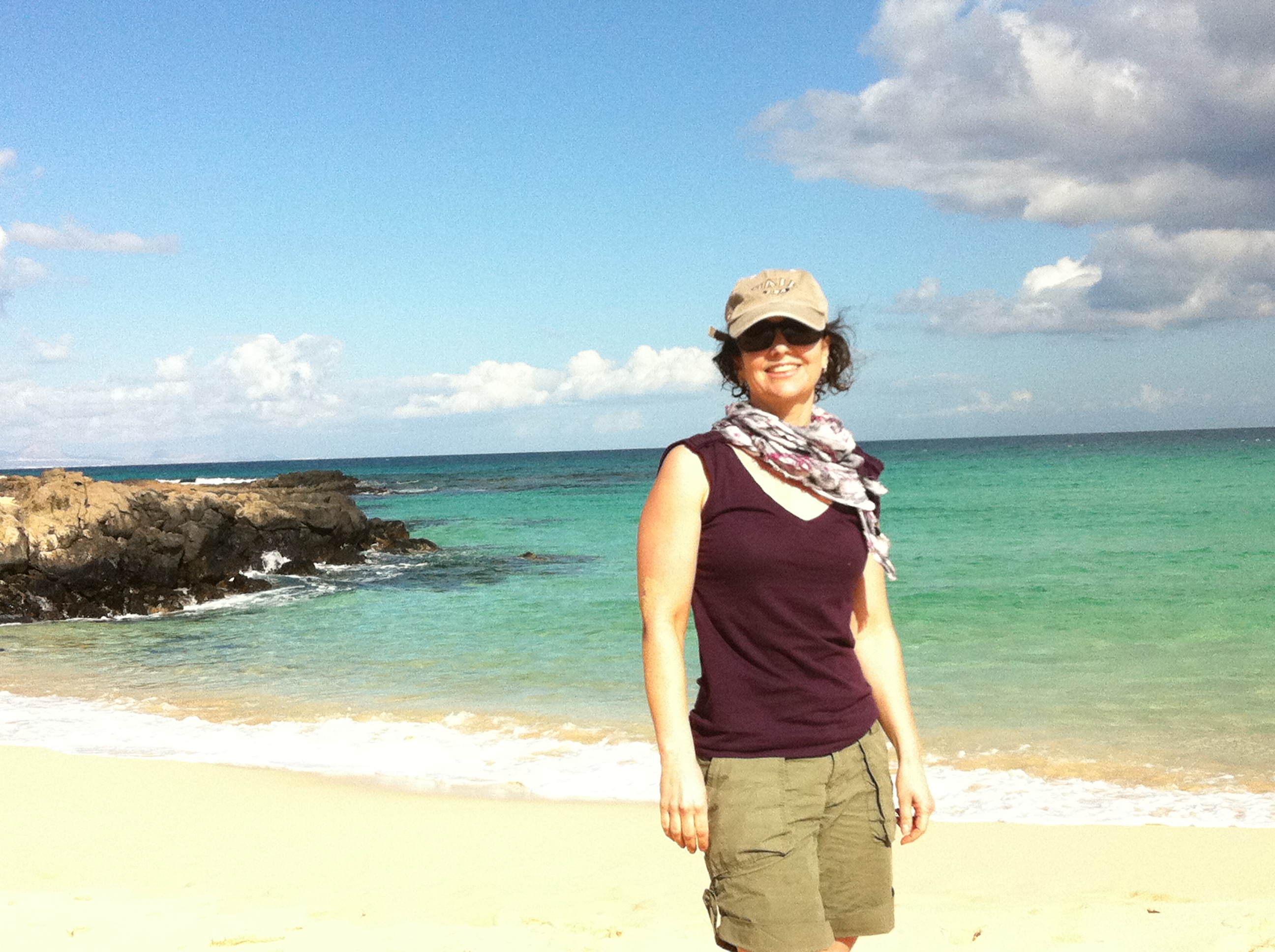
Feeling a lot more balanced in Fuerteventura


Posted in Health, Leisure, Perfectionism, Women, Work | Tagged , , , , , | Leave a comment

The return of the baby bug

It came back. Only momentarily, as I’m well aware of the futility of spending time thinking about things I can’t control or that are far in the future. But the baby bug made a brief return appearance.

There’s an explanation for this.

The patter of ...

I’ve been researching a newspaper feature about infertility and how it impacts friendships between women and have spent the last week speaking to women about this (by the way, if you’ve struggled with infertility or are a mother who has friends with infertility problems and would like to talk about challenges around friendships, anonymously or otherwise, please do get in touch. I’m still looking for interviewees and have until Jan 30th).

I also had a long chat about the topic with a counsellor who works with infertile women and couples and it really moved me. It moved me because I have friends who’ve struggled with this – attending christenings, congratulating other women on their pregnancies, seeing prams or baby bumps around every corner as they battle infertility or recover from miscarriages – and I don’t think I ever really understood how hard all that must be. But talking to someone who works with infertile women day in, day out, really brought it home.

I guess that conversation also moved me because it left me pondering how I’d cope in a similar situation. Would I be willing to subject my body and my emotions to numerous rounds of infertility treatment if I was ever in a position to have children but discovered I couldn’t conceive naturally? I don’t like taking paracetamol and I use chemical-free shampoo so I’m not sure how I’d feel about injecting myself with fertility drugs. And how would I cope with the disappointments, heartaches and stress that seem to come with the territory?

Of course, I don’t need to answer those questions right now, or even ask them, for that matter. I can’t see into the future and I’m a long way off any of this. But at the end of my chat with the counsellor, I confess I shed a tear for what my friends and so many other women have gone through and perhaps out of fear that I may end up going through the same.

The baby bug also returned momentarily because I watched Unrelated, a film by Joanna Hogg about a woman coming to terms with the things she may never have. I won’t give any more of the story line away in case you haven’t seen it and would like to, although I guess you’ll have a rough idea by now. The film is incredibly subtle and I expected to be more moved as I watched it. But it had a delayed effect. As I switched off the lights in my beautiful, silent flat and took myself off to bed, a question went through my mind: “Will it always be this way?”

But that’s enough melancholy for one blog post. And I’m pleased to say I managed not to dwell on the baby bug. I brought myself back to the present moment the following morning with a ten minute-long gratitude session – on my knees, by my bed, saying thank you for everything I have in my life today: my home, my work, my bicycle, the sun, the rain, my family and friends, my freedom and a holiday I’m about to take. I’m exactly where I’m meant to be.

Geographicals

As an addendum, and because I’m going away next week, a brief note on geographicals.

Have you ever heard of the phrase ‘doing a geographical’? It describes a tendency to hop from one place to another – from city to city, country to country, or continent to continent, or from one job or friendship group to another – in search of excitement, fulfillment or peace or out of a sense of chronic dissatisfaction, as I wrote about in a previous post.

I was an expert at doing geographicals when I was younger. After a year living in Spain when I was 21, I decided England was the most boring place on earth and I had to escape. After university, I bought a one-way ticket to Australia, imagining I’d never come back. I’d decided the Australian lifestyle would be perfect for me – outdoors, beach, sun etc. And maybe it would have been, but I was too young and restless to stick around. There had to be something more. I moved on to New Zealand, Fiji, the States, and then to Mexico, Brazil, and finally, 10 years after I’d left, back home to the UK.

I congratulate myself for recovering from my compulsion to do geographicals – I’ve lived in London for more than nine years and haven’t planned to leave yet. But I can still fall into the trap of thinking that happiness, fulfillment, excitement or peace is out there – in the Himalayas or the Andes or on the beaches of Mexico or Brazil. Now, I love a good holiday and I really cherish my adventurous spirit, but I’m finally realising that I take myself with me wherever I go – so if I don’t have peace or happiness inside, I’m not suddenly going to discover it sitting cross-legged in India (although the break might be good for me!).

This is revelant because I’m off on a week’s holiday – a rare event. For once, I’m leaving work and emails behind, even if it’s only for seven days. But I’m writing this to remind myself that I take myself with me whenever I go away and that peace, contentment and satisfaction are found on the inside.

And I can help create that sense of peace every morning – through gratitude, acceptance and living for today.

Posted in Fertility, Pregnancy, Trust, Uncategorized, Women | Tagged , , , , | 2 Comments