Vulnerability

“Every morning, I set an intention to be courageous.”

Those words have been ambling around my brain for the last few days, ever since I heard Brené Brown utter them on Wednesday evening, during a Q and A on vulnerability at the School of Life in London. I was one of the lucky people to get in to the event – tickets sold out within 48 hours.

I consider the rush for the tickets and the fact that Brené’s Ted talks on vulnerability and shame have been watched by millions of people around the world a really positive thing – for all of us. The huge interest in her work means (or at least I interpret it this way) that so many of us, if not all of us, feel vulnerable and experience shame – despite the fact that an equal number of us tries to hide those emotions, often quite successfully.

So I can conclude that when I feel vulnerable or exposed to hurt or rejection or gripped by fear, it’s likely the person on the other end of the phone or sitting opposite me (this could be a friend, a boss, a potential employer, or prospective boyfriend or partner) is feeling the same or at least has felt the same at some point in their lives.

This is really good news, particularly when it comes to my ambitions to be a more widely published journalist and to get my books (I’ve now got two ideas on the go!) into print. When I quiver inside at the prospect of someone telling me my ideas don’t hold water or that my writing isn’t good enough, I can remember that the person I’m speaking to has quivered too. He or she may not be quivering in that moment – they may be completely unflustered during that particular exchange – but it’s likely they’ve quivered in the past. It’s probable they know very well what it is feel all aquiver (insecure, wobbly, shaky, nervous, unsettled, to mention just a few definitions).

I’m finding this realisation reassuring and I’m hoping I can use this understanding in my daily life to be more bold, more resilient and more accepting of my sometimes shaky insides.

That’s what Brené challenges us all to do through her talks and via her latest book: Daring Greatly: How the Courage to Be Vulnerable Transforms the Way We Live, Love, Parent, and Lead.

The title of the book comes from a Theodore Roosevelt quote from 1910:

It is not the critic who counts; not the man who points out how the strong man stumbles, or where the doer of deeds could have done them better. The credit belongs to the man who is actually in the arena, whose face is marred by dust and sweat and blood; who strives valiantly; who errs, who comes short again and again, because there is no effort without error and shortcoming; but who does actually strive to do the deeds; who knows great enthusiasms, the great devotions; who spends himself in a worthy cause; who at the best knows in the end the triumph of high achievement, and who at the worst, if he fails, at least fails while daring greatly.”

Putting ourselves in the arena and slugging it out may be terrifying, Brené said, but it’s nowhere near as terrifying or dangerous as looking back and saying, ‘what would have happened if I’d shown up for myself. What would have happened if I’d really tried?’

Brené made so much sense to me on Wednesday evening that it’s hard to pick out the best bits but I’ll try.

She said that setting an intention to be courageous every day is the only thing that saves her when she gets attacked or rejected – at least she can hold on to the fact that she’s been courageous, that she hasn’t got up in the morning and said, ‘I’m going to do my best to be liked today’.

She described vulnerability as uncertainty, risk and emotional exposure and said she’d spent most of her life trying to outrun or outsmart it, staying under the radar, trying not to get hurt – but this kind of behaviour comes at a huge cost, because “when we armour up against vulnerability, we armour up against love and joy.”

This makes perfect sense to me. I think I spent many years trying to do the same, trying to avoid vulnerability, to escape getting hurt, to avoid being laughed at and running from potential rejection, belittlement or that feeling of being overly exposed. And I did a pretty good job at it, climbing high and building a strong fortress around myself, comprised of achievement, status and external accolades. But something was dying inside. There were plenty of artificial highs and adrenalin rushes but the real me was missing, along with love and joy – I was numbed to them, blocked off from them. As Brené said, we try to perfect everything, control everything and please others as a barrier against vulnerability.

I also loved what Brené had to say about our tendency to expect the worst, to imagine catastrophe around every corner. I’ve blogged about this before, and particularly in my recent post ‘Be still my beating heart‘. Some of us imagine tragedy in moments of joy, she said, because we want to beat vulnerability to the punch, we don’t want to be caught off guard by uncertainty or pain.

Her solution to this is to try and practice gratitude in the moment – so when things are going well but I fear the worst, to say ‘thank you’ for where I am or what I have. Or when I’m stood in the park on a sunny day and I think the two men walking towards me are going to mug me (a throwback to being attacked at gunpoint in Mexico), perhaps I can look around and say thank you for the vivid colours of the trees (I still wonder where to draw the line between trusting the universe that all will be well and avoiding having my mobile phone snatched in London?! Expect the best, plan for the worst?).

The fear of being laughed at or belittled is the biggest bar to creativity, Brené said, but there’s never been a truly innovative idea where that didn’t happen. She also said she could wallpaper the room with rejection letters for her book proposal, which gives me great hope!

Being vulnerable and putting ourselves out there won’t be easy and it can be exhausting. But the alternative is a long, slow spiritual death – the sense, which I’ve experienced in the past, that our light has gone out. Austrian psychiatrist Viktor Frankl said: “What is to give light must endure burning.”

So now I turn to my attention to someone who, I believe, has dared greatly, has exposed her vulnerability and has most definitely slogged it out in the arena of life, with sweat, tears and probably some blood. There’s no sitting on the sidelines for my friend and former colleague Sophie Walker (@sophierunning).

Last night, I was at the launch of Sophie’s first book: Grace Under Pressure: Going the distance as an Aspergers Mum. It’s an incredibly powerful and moving account of Sophie’s struggle to nurture, understand, protect and get the appropriate support for her darling daughter Grace for many years before and after a diagnosis of Asperger Syndrome, while at the same time battling her own depression, anxiety and acute sense of failure. It also describes how Sophie found an outlet for her grief and pain through running and raised thousands of pounds for the National Autistic Society, of which she’s now an ambassador, all the while charting the ups and downs of her emotions and her marathon training on her blog. The book is inspiring, has an incredibly broad reach and I highly recommend it.

I take my hat off to Sophie – for her grit, her determination, her courage and her willingness, always, to get into that arena, no matter how big and scary it may seem. My wish is that we can all look to Sophie’s courage and that of her daughter to inspire us to get into the arena too.
Posted in Creativity, Uncategorized, Women | Tagged , , , , , | Leave a comment

A natural high

Imagine a world where everybody lived, worked and related to each other as their authentic selves. A world where there was no pretending, no masks, no false personas. A world where the only part anyone played was their own – the one part they were destined to play.

I have a feeling we’d all be a lot happier. And we’d be really good at what we were doing – because we were always meant to be doing it.

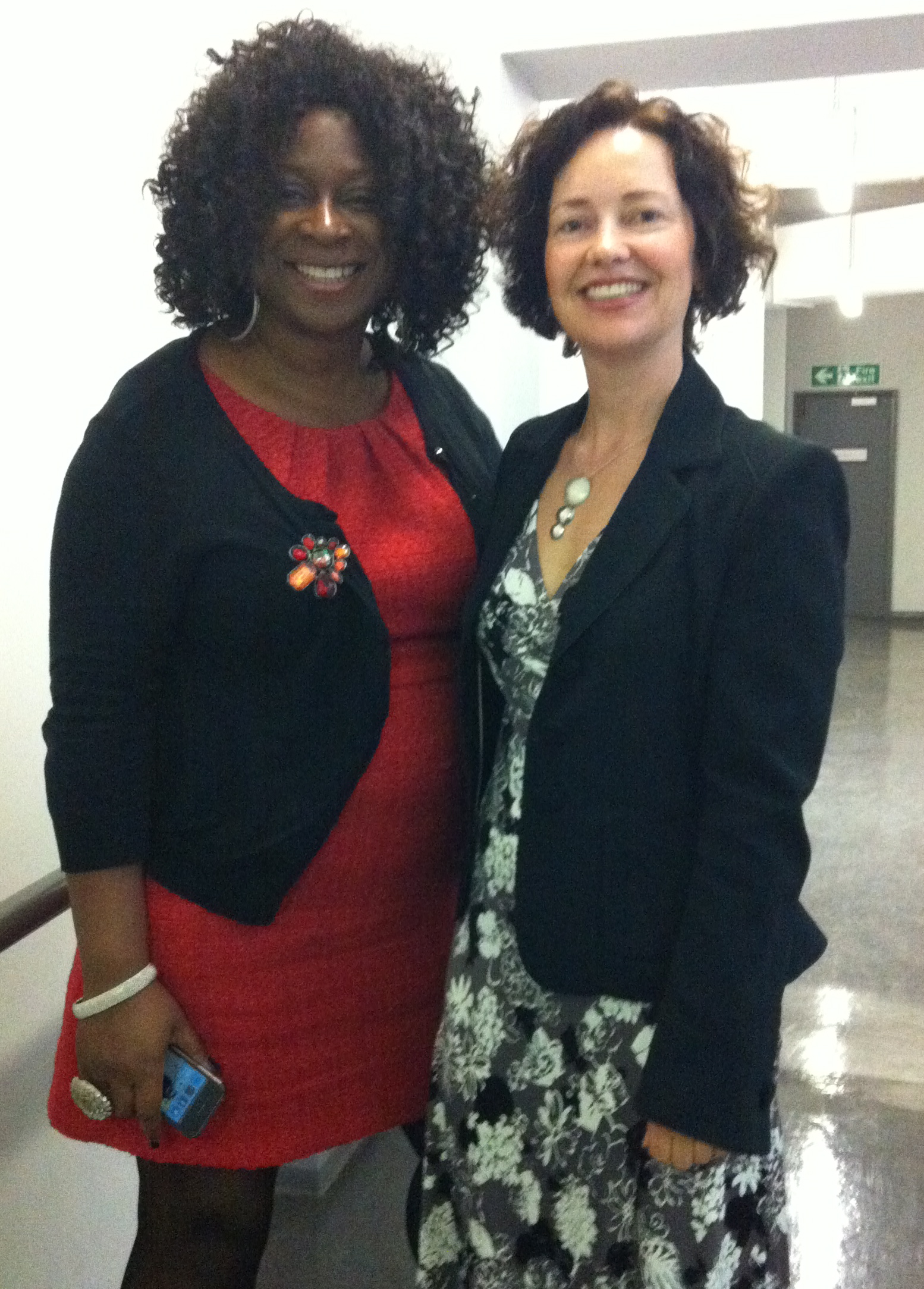
I got a glimpse of that world yesterday, and it was a pretty cool place. I took part in a Women in Business conference hosted by the National Black Women’s Network, and the indomitable Sonia Brown MBE (@soniatalks). I was at a similar event in May last year and came away just as inspired and moved to blog about it: If you can dream it.

The difference is that while last time I was sat in the audience, wondering where on earth my career was going and how I was going to find the time and money to maintain my creative writing and pursue my passions, this time I was at the front of the room, stood at the podium, delivering a presentation about those passions.

Sonia and I – being authentic

I gave a workshop on blogging and talked about how blogging had helped me discover my authentic voice after years of silencing it, how it had given me back my love of writing and how it had created a platform from which to approach different newspapers and magazines and write about issues close to my heart.

I talked about my initial motivation for blogging – to publicise my efforts to abstain from negative thoughts about my body, appearance and achievements during Lent last year – and how exploring my feelings, thoughts and ups and downs throughout the past year and a half as I turned 40 and then 41 had been a cathartic experience for me and, from the responses of my blog readers, inspiring for others. And I explained just how far a blog can take you in your career or your business.

And despite all my talk of fear, panic, dread and anxiety in my last post, I didn’t experience any fear, panic, dread or anxiety as I spoke, apart from a few seconds of pre-talk nerves, which, I think, are healthy because they mean I’m moving out of my comfort zone.

And what was the response from the audience to my authentic self? What was the reaction to me being me? It was overwhelmingly positive, affirming and validating. I got so much love, support and positive feedback that I was buzzing until the early hours of the morning.

This is really exciting. It turns out that the love, security, validation and affirmation I’d been chasing my whole life – through a high-profile career, by achieving a certain professional status, by following a well-worn path, by adapting myself to suit the needs of others or by hiding my true self in relationships – is available to me, and by the bucket load, when I’m me.

Nobody else. Not an edited version of myself. Just me. 

Authenticity is cool. And I want to write and speak about authenticity and inspire others to be their true selves. I know there will be lots of opportunity to do this in the future – and even to get paid for it.

To give a flavour of my last 24 hours of authenticity, I received many supportive tweets and emails from those who heard my blogging workshop yesterday, I was offered the opportunity to do some paid work in a field that really interests me, I’ve had an encouraging conversation with a literary agent about my book, I’ve been invited to guest blog on another well-read site and I’ve been invited to speak on the radio tomorrow morning about women and wellbeing.

Authenticity rocks. And it brings results.

That was in evidence at the NBWN event yesterday: so many women following their heart and pursuing their dreams, ploughing on regardless of obstacles, challenges or limited resources. So many women inspiring others to do the same.

I loved Sonia’s encouragement to all of us to take rejection in our stride, to get up, brush ourselves off and to try again, as many times as necessary. Her enthusiasm and energy know no bounds. There’s no slouching or napping when Sonia’s in the room.

I loved Jenni Russell‘s (@pelvicsecrets) boldness, her vision and her passion for our pelvic floor.

And I loved Carol Pyke‘s (@carolepyke) presentation on the power of our stories and the importance of staying true to ourselves : “In this game of life, only play YOU to the best. Play someone else and you’ll be mediocre at best.” “Be yourself – all others are taken!”

Carol asked us all to come up with three words to describe ourselves. I decided on authentic, passionate and inspiring.

It seems, from the reaction of others, that is how I was yesterday. And it’s how I hope to be every day.

Postscript

In case you were wondering, that little white box I blogged about in my last post, Be still my beating heart, is no longer in my handbag or so much on my mind. It’s in the kitchen drawer. For today, I’m relying on my inner resources and God to give me my strength, ease my fears and bring me through.

Posted in Empowerment, Uncategorized, Women | Tagged , , , , | Leave a comment

Be still my beating heart

I have a box of anti-depressants in my handbag. Citalopram to be precise. I’ve opened the box and read the leaflet but the foil is intact, the pills unswallowed. I picked them up after seeing my GP on Monday. They’ve been in my bag, and on my mind, ever since.

To my regular readers, the presence of these pills may come as a surprise. If I may be so bold as to quote myself, in a recent post I wrote:

“Three months on, however, and without taking any pills, I feel – dare I say it – happy. I feel content, hopeful and excited. I feel grateful and loving towards myself and my fellows. Yes, I feel good.

I have nothing against medication and know many people who’ve come through rough times with the help of anti-depressants. I can, however, be stubborn as a mule and insistent on doing things my way. This time, it appears to have worked.”

So what’s changed?

In one way, very little. I still feel quite content, hopeful and excited. I still feel grateful and loving towards myself and others.

I’m not suffering from depression – at least not according to the standard medical questionnaire. I have enthusiasm for life and positively love getting out of bed in the morning. I’m sleeping OK – although sometimes it does take me a while to switch off. I keep a reasonably tidy home, wash regularly, change my bed sheets at appropriate intervals and take pride in my appearance. I don’t under-eat or overeat, I take gentle exercise a few times a week and I adore sitting in the sunshine. I have hopes and dreams – to write a book, to publish more articles, to teach, to travel, to laugh, to dance, to marry and have children.

My issue is anxiety. Fear. Dread. Panic. An overactive, racing heart. I often feel on edge, even if there’s very little going on. Of course, it comes and goes but more often than not, I expect the worst of people and situations, can easily think others dislike me or are angry with me and sometimes, when walking the streets, I’m waiting to be attacked – literally.

When I look at my weekly schedule or my bank balance, I’m frequently gripped by fear. When I have to make phone calls I deem difficult – to employers about work or money – my heart beats so fast I think it’s going to burst out of my chest. And the prospect of a date or romantic liaison fills me with so much apprehension (I’m afraid of hurting and getting hurt) that cancelling seems the only sensible option.

It’s not a permanent state but it’s all too frequent. My panic is very easily triggered.

I’ve experienced this for a very long time but recently I’ve come to a new level of awareness. I always thought I was just highly strung, an over-sensitive perfectionist. But I now see, more clearly than ever before, how this fear, this dread, this panic and this expectation that the worst will happen is a learned behaviour from my childhood, a pattern that’s become so familiar it’s incredibly difficult to break.

This growing awareness is due, in part, to another talk I watched by the rather clever Paul Sunderland, who I wrote about in my ‘Waiting for my honeymoon’ post. It’s called Adoption and Addiction and if you have 50 minutes or so, it’s well worth a look:

This lecture really opened my eyes to so many of my behaviours and their root causes. I am not adopted – I’m the image of my Mum – but for one reason or another, I developed many of the characteristics of adoptees, which Paul describes so powerfully. They include a deeply rooted anxiety, a sense that neither the world nor the people in it are safe, a feeling of not being good enough, a pervasive sense of shame and an expectation that all will end in catastrophe so I’d better live on red alert.

I developed many of the behavioural patterns that adoptees do: compulsive behaviours to mask shame, numb anxiety and alter my mood, including substance abuse and an addiction to safety and security at all costs, to the detriment of my own wellbeing (in other words codependency). At the same time, and in apparent contradiction, I developed an addiction to high-adrenalin situations and a compulsion to create anxiety in my life because it felt familiar, and therefore, strangely comfortable and reassuring. It seems we’re so often drawn to what we know, even if it’s harmful.

So not only did catastrophic thinking become my modus operandi but I put myself in situations that were likely to lead to catastrophe, keeping my adrenalin levels at a height I was familiar with.

Take my rather reckless decision (alluded to in my posts ‘A Mexican memoir‘ and ‘Staying alive‘) to get into a taxi cab on the streets of Mexico City at 4 am when I was blind drunk, alone and well aware that street taxis often ambushed their passengers and stole all their wares. I was, unsurprisingly, ambushed by two men who jumped in at the traffic lights, held a gun to my chest and spoke to me in a way that I thought signalled the end.

Then a few months later, I hailed another Mexico City street taxi with a friend and found myself with a knife at my throat. I guess it’s no wonder, then, that when I walk the streets of London or to think of it, of any city, I imagine I’ll be attacked. I’ve experienced some bad stuff and I expect it to happen again. I don’t seek danger anymore, thank God, but past experiences still haunt me and I live on high alert.

I’ve created anxiety in other, less dramatic ways too: I’ve engineered drama, chaos and stress in relationships with others, particularly with men; I’ve postponed my work until the last minute so I’m always battling deadlines; I’ve jumped out of planes, off bridges and canoed down rapids and – with apologies to my friends – I’ve arrived perpetually late for appointments. About 10 minutes to be precise. I used to blame my tardiness on the eight years I spent in Latin America but I now see how it creates stress and causes me to rush – I drop stuff, forget things and end up in a tizz.

Of course, so much of this has changed and is still changing. I’m making a concerted effort to arrive on time, which can result in a rather odd sensation. Whenever I’m on time, I assume I’ve got the wrong meeting place or something terrible has happened to my friend! I’m working in a more organised and responsible fashion so assignments aren’t left until the last minute. And I’m trying to put down high-adrenalin sports for more calming activities like gentle swimming, yoga, pilates and meditation.

Despite these changes, Paul’s talk got me wondering how my adrenalin addiction and high-stress lifestyle have affected my brain chemicals, particularly my serotonin levels, over the years. Serotonin is a soothing chemical that helps to keep us calm and happy. It also, says Paul, helps manage shame.

I concluded that if I’ve been drawing so drastically on my serotonin for so much of my life – to calm my hyper anxiety and to help me survive the frightening situations I subjected myself to – then my levels of this happy drug could quite easily be depleted, they could be on the floor. And that’s why I ended up at the doctor on Monday – following a work phone call that set my heart racing and my brain wondering if my body could take much more.

So why are the pills still sitting in my handbag? Well, one answer is anxiety. I’m too anxious about taking the anti-anxiety pills to actually take the pills! But seriously, I have a busy few weeks – including motorbike training and driving tests that include a number of emergency stops – and I’m wary of being in a fog, less able to concentrate or sleepy when I need to be super alert.

Another reason is that I feel like I’m cheating. Yes, that’s right. Medication seems the easy way out and I have never, ever, taken the easy way out of anything – except using food, drink, men etc to soothe my pain, but you know what I mean. In my mind, life is about striving. If it’s easy, it means I haven’t tried hard enough. If there’s no blood, sweat or tears, it doesn’t count. It’s sad that I think that way.

My reticence is also down to the fact that after years of pumping my body with sugar, excess food, alcohol and other mood-altering substances, I like to know that what I’m feeling is actually what I’m feeling, even if it is pretty dreadful.

But the final reason those pills are still in their box, and the one that makes the most sense, is that I’m taking some time to pause and reflect and to question, once again, whether there isn’t another way.

After becoming aware of my heightened anxiety and catastrophic thinking this week, I spent some time self-soothing. I went to my bedroom early on several evenings, lit candles and an oil burner, prayed, meditated, hugged my cuddly dog to my chest (I’ll get a real one some day) and generally reassured myself that everything would be OK. It really helped.

I’ve also spent more time in Nature, sat in the sun and have exercised. And I made a few phone calls to friends to share my anxiety before having a difficult conversation about work and money. I’m pleased to say it’s paying off. My heart isn’t beating quite so fast.

Maybe, just maybe, I do have the tools to change my behavioural patterns, ward off the panic and counter the catastrophic thoughts. I might have a chemical imbalance, that’s always a possibility, but what if self-soothing really could work?

The other thing to mention is God. He shouldn’t really be an afterthought so apologies – to God – for putting Him at the bottom of the page. But as I’ve written before, the antidote to fear is faith.

As I lay in the bath on Monday night, my tears making dents in the bubbles, I asked God: “Does it really have to be this way? Should I make it easier for myself?”

The next morning, I came across a blog by my friend Flo, which felt like a tonic in itself. In  Embracing Life, she shares feelings of sadness, emptiness and regret but also talks about healing, patience and trust.

Then, a little later, as I took ten minutes in the sun before entering my studio a Jehovah’s Witness approached me. Don’t worry, I’m not joining up, but she seemed a kind lady and she reminded me, to use her words, “that God loves women”.

Finally, I came across a book on my shelves late one night about the Psalms. It really spoke to me and brought tears to my eyes.

So, concluding this rather long post, I’m trusting – for today – that I’ll find my way. The box of pills is there as a backup. But I’m trying out some other tools: faith, self-soothing, retraining my brain to expect the best, not the worst, and some gentle exercise.

Postscript

Before publishing this post, I asked myself whether it was wise to share so much of myself. So I paused and reflected and sat on this blog for a few days. But my conclusion was that I’ve been blogging from my heart for such a long time, speaking my truth and baring my soul – so why skirt around what’s really going on? And sharing in this way has been cathartic for me and, it seems, helpful for others.

We take a risk when we disclose our innermost thoughts – the first question that comes to mind for me is will I ever be employed again? But then if I can’t be employed as my authentic self, what’s the point? And I know, in shiny offices around the globe, there are tens of thousands of men and women who are taking pills to cope with life or using food, alcohol, drugs or sex to numb stress and to get by. Ironically, it’s often our high-adrenalin natures, our perfectionism, our all-or-nothing personalities that makes us so good at our jobs.

So this is my truth. And if it serves to lessen the stigma around mental health, addiction or anxiety disorders and helps one person feel less alone, then that has to be a good thing.

Posted in Addiction, codependency, Eating disorders, Faith, Happiness, Positive thinking, Recovery, Spirituality, Trust, Women | Tagged , , , , , , | 9 Comments

Every body beautiful

Anger can sometimes get a bad wrap but it has its uses. In fact, it was anger that got me blogging.

When I launched myself into the blogosphere some 18 months ago, I didn’t really know what I was doing. I just knew I had to do something.

I’d been attending some events around International Women’s Day, including the Endangered Species women’s summit on body image, and I was incensed. After listening to statistics on eating disorders and to stories of girls who were starving themselves to death, I was furious at the devastation negative body thoughts and self-harm had wrought on so many lives, mine included.

As I left the summit on London’s South Bank, it struck me that I’d spent most of my life obsessing about my looks and trying to do something to change them. I’d starved, binged, dieted, taken slimming pills and laxatives, exercised and exercised and exercised. I’d poked and prodded, tutted and moaned and frowned over and over again at my body, my hair and my skin. Nothing, absolutely nothing had escaped my scrutiny.

Yes, I’d had an eating disorder since my pre-teen years but even after finding some peace around food in my 30s, I’d continued to wage war against my appearance.

So it was, then, that I lay awake for a whole night in March 2011 turning an idea over in my mind – to abstain from negative thinking about my body throughout Lent and to blog about my experience. I had the usual chatter going on in my head – ‘don’t be silly, you’ll embarrass yourself, who’ll read that etc etc’ – but fortunately my frustration with the status quo was more powerful. The next day, I published my first post on my newly launched blog, Just As I Am – An Experiment in Self Acceptance, and continued to write almost daily for the following 40 days.

Eighteen months on, I continue to blog, under a different title and with a different focus, reflecting no doubt the different place I’m in today. I’ve matured – turning 40 and then 41 – and I believe my writing has too.

But it’s great to remember where this blogging journey all began, which I did a few nights ago at an event with Body Gossip, the positive body image campaign I featured on Day Two of my Just As I Am blog. I was at the launch on Friday evening of Body Gossip: The Book – a compilation of stories and poems written by members of the public and a smattering of celebrities (such as Alesha Dixon, Jermaine Defoe, Anne Diamond and Craig Revel-Horwood, and with a forward by Gok Wan) to inspire and encourage us all to accept and love our bodies, whatever shape, size or colour they are or whatever ability or disability we have.

I’m pleased to say a poem I wrote – entitled ‘If Only’ – is included in the book. Those two words have occupied a lot of my head space over the years – ‘If only I looked like her’ ‘If only I had her body, her hair, her life etc’. You get the picture. But in the poem I conclude that my biggest wish is to accept myself as I am rather than keep wanting to be somebody else.

I haven’t had a chance to look at all the other entries in the book but those I have read have inspired, amused and moved me. Congratulations to Body Gossip’s Ruth and Natasha and to all their supporters for their tireless work. I look forward to reading the rest of the book and I recommend it to all.

Body Gossip has also got some new films out, based on submissions from the public, but ‘This One Is For You’ remains my favourite BG film. It’s incredibly powerful:

As I reflect on my own journey, what’s clear is that this obsession with our body and our appearance distracts us from life – at least that was the case for me. It creates a barrier between us and the rest of the world, it builds a wall not only around our bodies but also around our hearts and it takes away our freedom to be.

Life doesn’t necessarily get any easier without the body obsession or the eating disorder – this blog can certainly vouch for that. The rollercoaster continues. But at least we are well and truly on it. We are in life, feeling it, living it. At least we’re not numbed to the pain.

Of course, I understand why sometimes we might want to numb the pain. Sometimes – when things get a little too much – it can seem the only way forward.

But if we choose to numb out the pain, we also numb out the joy. And it doesn’t get any more harmful than that.

Posted in Addiction, Body Image, Eating disorders, Uncategorized, Women | Tagged , , , , | Leave a comment

Waiting for my honeymoon

Yes, I’m waiting for my honeymoon. But before you fall off your chair, no, I haven’t gone and got married. Nor am I even remotely close. I don’t think exchanging a few emails with a couple of random guys on an Internet dating site counts as much progress.

No, this post isn’t about the prospect of spending three weeks in a luxury hut in the middle of an aquamarine sea or canoeing up the Amazon (whatever you’re fancy).

I’m talking about the period at the start of a relationship when you’re floating on a purple cloud (I prefer purple to pink), when everything is hunky dory and when the man you’re dating seems the best thing since Kellogg’s Special K Red Berries (I don’t eat that sweet stuff anymore but I was crazy about it when it first came out).

There are conflicting views on how long this honeymoon period can last – from months to years, and it likely depends on whether you’re married or not. According to the Urban Dictionary, though, three months is “the maximum period between a person’s entry into a new situation and a person’s complete screwing up of said situation or essential elements of it.”

Whatever the norm, frankly I’d be happy with just a few weeks.

I know I’m growing out of this – thankfully, and about time – but there’s a common thread running through my relationship history. It has involved, pretty much from the outset, questioning whether the guy was right for me and focusing far too much on the cons rather than the pros. I have experienced the purple cloud, but that was generally in the period before our lips – or even our eyes – met. I’ve admired men from afar, built them up in my imagination, but once we’ve got close, my scrutinising has taken off.

My nitpicking has ranged from his choice in shoes, to the size of his hands or width of his shoulders, to the noise he made when crunching his cornflakes. The ‘Is he? Isn’t he?’ debate has reached such a crescendo in my head that an imminent explosion has seemed likely.

Of course, today I see this approach for what it was: a foolproof strategy to ensure I never had to make that scary decision to commit my heart to anyone – with all its potential for rejection and pain.

It also indicated a lack of acceptance of my own flaws and failings. If I didn’t like the width of his shoulders, chances are I hadn’t accepted the shape of my thighs. If I didn’t approve of his eating habits, it’s likely I hadn’t come to terms with mine.

The good news is that awareness is the first step on the road to change. Today I have that gift of awareness, in bucket loads, but I’m always ready for more.

Which is why I found a talk by psychotherapist and addictions specialist Paul Sunderland so fascinating, informative and helpful: Recovery & the Couple Relationship. It’s about an hour long so if you’re interested in watching it, set aside some time. You may not think it’s for you, particularly if you don’t identify yourself as having an addiction, but if you’re in a relationship or would like to be in one and make it work, I’d say it’s worth an hour of your day. And I also reckon most of us are a little bit addicted and/or codependent anyway.

For the time-challenged, I’ll summarise the parts that really spoke to me.

Sunderland talks about relationships having three phases: the Ideal, the Ordeal and the Real Deal. The Ideal phase is the honeymoon period, the falling-in-love stage that, he says, generally lasts from 18 months to 3 years. The Ordeal phase, as its name suggests, is the tricky period when couples start to discover things about each other they don’t like and they have to negotiate boundaries with each other. If you make it through the Ordeal, you’ll get to the Real Deal – true partnership and intimacy based on acceptance of each other’s flaws and a good negotiation of boundaries and personal space.

If you’re reading this and you’re single, you may think you’ve never met The One. But maybe you’ve never made it through the Ordeal. I’m no expert but I’d say that’s the case for me.

The Ordeal is a tricky phase. It involves getting close and confronting one’s fears of abandonment and rejection, compromising and learning to love things about your partner you really want to hate. It’s no surprise, then, that many of us prefer to get out when the going gets rough and return over and again to the Ideal. When we start disliking aspects of the person we’re with, we assume he or she isn’t right and we go in search of the purple cloud again. When we hit choppy waters, we jump ship and go and find a sun-kissed desert island – until the storm clouds close in once more and we seek out another life raft. Of course, the case may be that he or she wasn’t the right guy or girl, or it wasn’t the right time, but it’s worth being aware of our patterns.

Sunderland explains that some of us are more prone to continue this cycle, to repeatedly flee from the Ordeal stage, than others. The Ideal phase can induce a drug-like state, which, for anyone with addictive or compulsive tendencies, can be incredibly difficult to resist. We search for a pleasurable high – through food, alcohol, drugs or in this case, love – because we want to escape reality.

Our childhoods often affect our ability to negotiate successfully the Ordeal. If we didn’t feel safe or secure as children, we can develop codependency, which Sunderland describes as “an addiction to security at all costs” and a block to intimacy.

He notes that 75 percent of a child’s wellbeing depends on a mother’s ability “to tell an emotionally coherent story” and how quickly children pick up on their parents’ moods. He also tells a moving story about a young child who asked, “is Daddy leaving because of the way I eat my crisps?” (his father was an alcoholic who angered easily when drunk). A child’s default position is to think it’s all their fault. They learn to tiptoe around their parents and say and do all the right things because neglect, rejection or abandonment, to a little person, can feel life threatening. But once this pattern begins, it can spread to all relationships and continue into adult life.

Codependency stops us from being true to ourselves in relationships and acts as a bar to honesty and intimacy. We contort ourselves, lose ourselves and do everything possible to put the other person at ease – in order to manage our own deep anxieties about abandonment and rejection. We attempt to become what we think our partner wants us to be – we’re so scared of being separate that we try to merge with another.

As you can imagine, this doesn’t make for a healthy relationship. As Sunderland explains, in order to be one (ie. a true partnership), you need to be two. The goal is to strive for separateness first – autonomy, if you like – so you can then come together as a couple. Of course, some of us can take this separateness to extremes, turning it into the compulsive avoidance of relationship, intimacy and love.

Thinking about Sunderland’s lecture, it’s nice to see how far I’ve come. I’ve worked hard over the years on my own codependency, my compulsive search for the Ideal, my fear of intimacy and issues around rejection and abandonment and on creating a life in which I feel autonomous and free to be me. I don’t always get it right but I’m encouraged by my progress, even over the last few months.

In early June, I blogged about my sadness. The tears had been flowing really fast for quite a few weeks, even months. Of course, I held it together pretty well on the outside but I was seriously worried about myself. I talked to my GP about anti-depressants and gave them a lot of thought.

Three months on, however, and without taking any pills, I feel – dare I say it – happy. I feel content, hopeful and excited. I feel grateful and loving towards myself and my fellows. Yes, I feel good.

I have nothing against medication and know many people who’ve come through rough times with the help of anti-depressants. I can, however, be stubborn as a mule and insistent on doing things my way. This time, it appears to have worked.

I took the rather enlightened step of changing the things that were making me unhappy. I stopped working like crazy on projects that didn’t fulfill me or give me space to express my creativity. I took some time off and spent whole afternoons lying in the sun (when it came out) or swimming in ponds or the sea. I spent time with friends and family. And I began writing my book, something I feel incredibly passionate about, that gives me a purpose and that allows me to be creative.

These are exciting times.

Most importantly, though, I learned – first-hand rather than from reading it in a book – that my happiness is in my hands and nobody else’s and that by changing my thoughts and behaviours, I can change my mood.

As a fully paid-up member of the human race, I’m sure I’ll slip back on occasion into doing things that drag me down but hopefully, with the gift of experience, I’ll be able to lift myself up.

Posted in Addiction, codependency, Creativity, Happiness, Love, Perfectionism, Relationships, Self-Acceptance, Uncategorized, Women | Tagged , , , , , , | 2 Comments

The curse of the capable woman

I spent the August bank holiday weekend with a bunch of intelligent, capable, successful, sporty women in their late 30s and early 40s.

We were doing what independent, childless women of our age do on a bank holiday – pleasing ourselves.

These are the pros of not having offspring. You can get up and go at a moment’s notice to a music festival in Dorset, with a pocketful of pounds (because you’ve established yourself in your career but haven’t had to pay for your children’s violin lessons) and just a few muesli bars to eat (because you can buy food as you go along and don’t have to worry about hungry children).

You can take your mountain bike, on the train or in the back of a car (because you don’t have to think about fitting in the kids’ bikes). And you only have to spend the shortest amount of time in the smelly, long-drop camping loos (because you don’t have to wait to wipe the little ones’ bottoms or help them wriggle out of their pants in the dark).

You can stay out late dancing and singing to KT Tunstall or crazy skiffle bands like Quinns Quinney (because you’ve only got yourself to worry about) and you can sleep in late the next morning (because you don’t have to cook eggs for the early risers).

Before I go any further, I should say there were plenty of families with children camping at the Purbeck Folk Festival – including a delightful four-month-old baby brought by the equally delightful only married member of our small group – and I’d hope to continue camping if I ever had children myself. But just for a moment, it’s worth remembering the freedom childlessness brings.

Unsurprisingly though, given the demographic of our mostly female bunch, the talk often returned to some of this blog’s favourite topics – themes that will also form part of the book I am writing: the timing of careers and family, our desire for motherhood, our fears we’ve left it too late and the difficulties of dating against the biological clock. As we strolled along the Dorset coast, we shared the trials and tribulations of Internet dating, our wish to be in a partnership and what we were looking for in a mate.

As usual, our chit-chat (although of course it wasn’t all about men and babies!) gave me plenty of food for thought but I was particularly struck by one idea that came to mind as I mingled with this high-achieving group of females.

I’ve always prided myself on my own capabilities in various areas of life. I consider myself of reasonable intelligence and pretty capable when it comes to practical things like camping or sporting endeavours like swimming or biking. I drive a Vespa around town and can reverse a car into a small space. With certain groups of friends, I’m the leader when it comes to reading the map, finding our way through forests, putting up the tent or jumping off rocks into the sea. So it was interesting to be with women who, for the most part, were more capable than me in the camping arena and fitter than me when it came to the bike.

Most of the time, this barely registered. I was quite happy to take a back seat and let others lead the way. But a sudden attack of self-consciousness and insecurity around my own capabilities – brought on by losing a key for my bike lock, struggling to get my tent into its bag as it started to rain and worrying about the prospect of being left behind on a long, hilly cycle – taught me a valuable lesson in how I relate to others, particularly to men I have been close to or who have tried to get close to me.

It pains me to say that I have sometimes judged men (in my head and perhaps out loud) for not being as capable as I would like them to be – this can be in sports, academia (especially spelling ability!), linguistic skills (speaking languages, that is, not French kissing), car mechanics or DIY. I understand why I’ve done this and have understood it for a while, but I gained new insight into it at the weekend.

I am or have been so unforgiving of myself – expecting myself to be accomplished and perfect in so many areas – and it seems I have expected exactly the same, if not more, from any boyfriend. But the standards I set are impossible for any man to meet – hence my singleness no doubt.

These high expectations seem to be driven by a fear of intimacy – if we erect barriers between ourselves and others and judge men for what they cannot do, it’s unlikely we’ll ever get close to them. And if we create extra-high hurdles for men to jump over, they’ll fall every time and we’ll never have to face our fears and take the plunge into a deeper relationship.

After all, can I really expect to find a man who is all singing and dancing? And I mean that literally because as well as being accomplished at sports, physically and emotionally strong, good at DIY, intelligent, a master of foreign languages and brilliant at spelling, I also expect him to be able to lead me around the dance floor to salsa tunes, jive like a pro or swing me around doing ceroc. On top of all that, he’s required to be gentle, caring and considerate, faithful and reliable, not at all arrogant despite his array of accomplishments and a willing and wonderful father to the children I hope to have.

Yes, I’m living in fairytale land.

I wonder whether strong, capable, independent women are our own worst enemies. We’ve worked hard to become accomplished in so many areas, we keep our homes tidy and our finances in order but we also climb trees and jump off rocks into the sea. We create these amazing, full lives for ourselves because that’s what we were taught and it’s what we deserve but then we often struggle to find a man who we deem to be our match or we neglect to make space for romance. We’ve got it so good that few men will be considered good enough. And we’ve designed ourselves not to depend on anyone. But men – so the dating books say – quite like to be depended upon.

It seems – and I know I’ve done this – we can be looking for carbon copies of ourselves, without realising that one of us is plenty and two – in a relationship – would only lead to fireworks (and not of the good kind). There must be some truth in the phrase ‘opposites attract’ but it doesn’t have to be about polar opposites. Perhaps we can just make space for someone who’s a little different to us and appreciate that their strengths may complement our weaknesses and vice versa.

After all, we all have weaknesses, some of us are just better than others at disguising them with our incredible strengths.

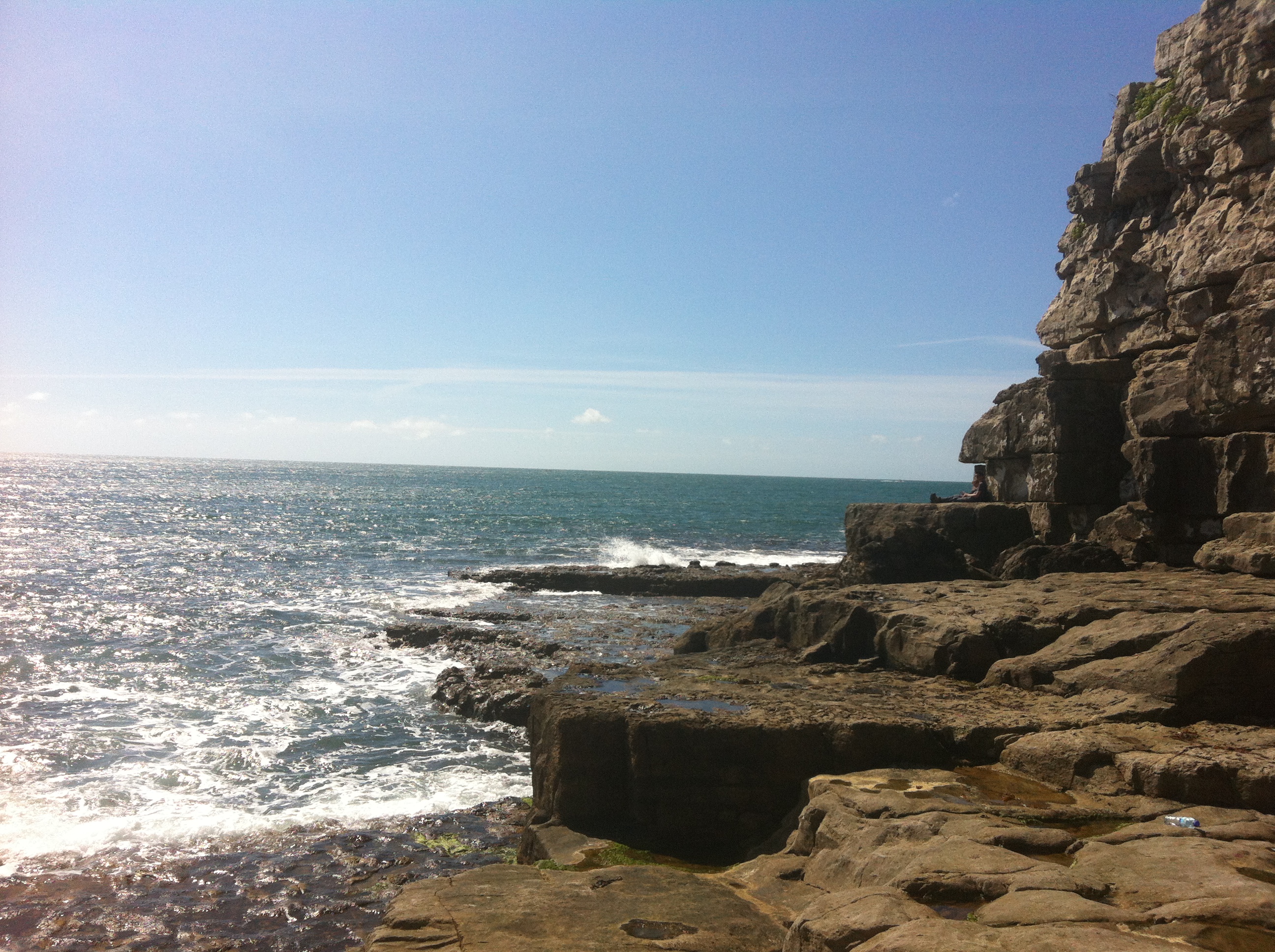
The refreshing sea off the Jurassic Coast

So the weekend, aside from being refreshing and fun, has also been enlightening. I understood, more clearly than ever before, how I may have given off the vibe to men in my life that they’re not enough (and I apologise if you’re one of them and are reading this) and I learned, once again, that accepting myself as I am is the first step to accepting others and opening a door to ‘love that heals my heart and makes my spirit sing’ (to quote a beautiful affirmation I heard a while back and have adopted as my own).


Posted in codependency, Fertility, Leisure, Perfectionism, Relationships, Self-Acceptance, Trust, Uncategorized, Women | Tagged , , , , | 2 Comments

The Olympic spirit

As I cycled along one of the capital’s canal paths on a balmy evening late last week, it felt great to be British, great to be a Londoner and great to be alive.

The national anthem rang out from a TV in a crowded open-air bar across the canal as another gold medal was awarded to a Brit, Londoners jogged towards me sporting various Union Jack attire and tourists wobbled along on Boris bikes, looking a little unsure of themselves but obviously loving the experience.

Spot the Olympic rings above the tunnel

And as I cycled home a few hours later, I spotted Olympic bunting draped along a moored barge and a small, nondescript set of Olympic rings nailed above one of the canal tunnels, difficult to see against the brickwork but a touching reminder that the Olympics were everywhere.

It’s been said before and it’ll be said again, but London and Britain have shined during these Olympics. And I’ve been as moved as everyone else by the friendliness, the camaraderie, the fun, the patriotism and, most of all, by the incredible feats of so many athletes from around the world.

The message I take away from these Games is that anything is possible and that it’s down to each one of us to create the life we want to lead.

We choose how we want to respond to our circumstances and to things that happen to us. We decide how we want to react to our past and make use of our present. We make choices with our hours, our days, our weeks and our years. We define our futures.

So many of the Olympians had been through so much, from losing a mother or father at a young age, to injury, frustration, sacrifice, self-doubt and disappointment. One athlete, Oscar Pistorius, is a double amputee. So many had battled grief, heartache, physical and emotional pain and crises of confidence before they even got to the Games.

It’s no surprise then that, win or lose, many ended up in floods of tears on the podium or at the finish line. And it seems I’m not the only one who cried along with them. There is something so moving and inspiring about human endeavour, about triumph in the face of adversity and about commitment and dedication taken to such an extraordinary level.

I was particularly moved by Gemma Gibbons, the British judo gold silver medallist who lost her Mum to leukaemia at the age of 17 and who looked upward and mouthed “I love you Mum” after beating her final opponent. There was Tom Daley, the 18-year-old diver, who dedicated his bronze medal to his Dad who died of cancer last year. And as a reminder to myself that my own minor aches, pains and injuries don’t need to deter me from doing the sports that I love, Nick Skelton won a showjumping gold at the age of 54 and having had a hip replacement, two knee operations and a lot of broken bones. Then there were our rowers, swimmers, cyclists, heptathlete Jessica Ennis, double track gold medallist Mo Farah and the well-deserved tennis gold won by a much more relaxed and confident Andy Murray. How could you fail to be inspired?

I loved Seb Coe’s quote at the closing ceremony: “We know more now as individuals and as a nation what we are capable of”.

The only thing I didn’t like was the tendency of some of the athletes who hadn’t achieved their dream of a medal to say they had let everyone down. I can understand their disappointment (or at least try to as I’ve never worked or trained so hard for anything) and can see why they might feel that way – they are often the product of an incredible coaching team and supporting family and friends who may have also made huge sacrifices. But as the commentators tried to tell them, they had let nobody down. And it’s not the best message to be sending out to those who look up to them – that winning is the only thing that counts.

That aside, I think the Games lived up to their stated aim of inspiring a generation. I’m certainly inspired. Maybe not to sign up to my local athletics club as I have to respect what my body is telling me about the impact of hardcore running. But perhaps to try a fun team triathlon with a few friends (I would swim or bike), to commit to daily exercises to strengthen my body and improve my flexibility and to make sure I’m taking part in team sports that lift my soul.

More importantly, though, the courage and devotion of the Olympic athletes have inspired me to choose the life I want to lead, to decide how I want to respond to my circumstances, to channel any grief, anger, frustration or disappointment into commitment and dedication to a better life for myself and for others and not to allow my past to stand in the way of a glorious, golden present and future. The Olympians have also reminded me that our dreams are worth fighting for.

In a short BBC sports psychology film I watched during the Games, the athletes interviewed said it’s all about believing you can win. As long as you believe that and do your best, the outcome doesn’t really matter. That’s the Olympic spirit.

If, like me, you want to soak up more of that spirit and hang on to the Olympic magic for a little longer, check out some of the great videos that are around: Golden moments from 2012, 20 Memories of London 2012 or Team GB singing Queen’s Don’t Stop Me Now.

And if you’re suffering from Olympic withdrawal syndrome (as I am), check out this great article in Athletics Weekly, London 2012 Olympics: the perfect hangover cure, which suggests getting involved in sport and makes some great points about the humility of the athletes.

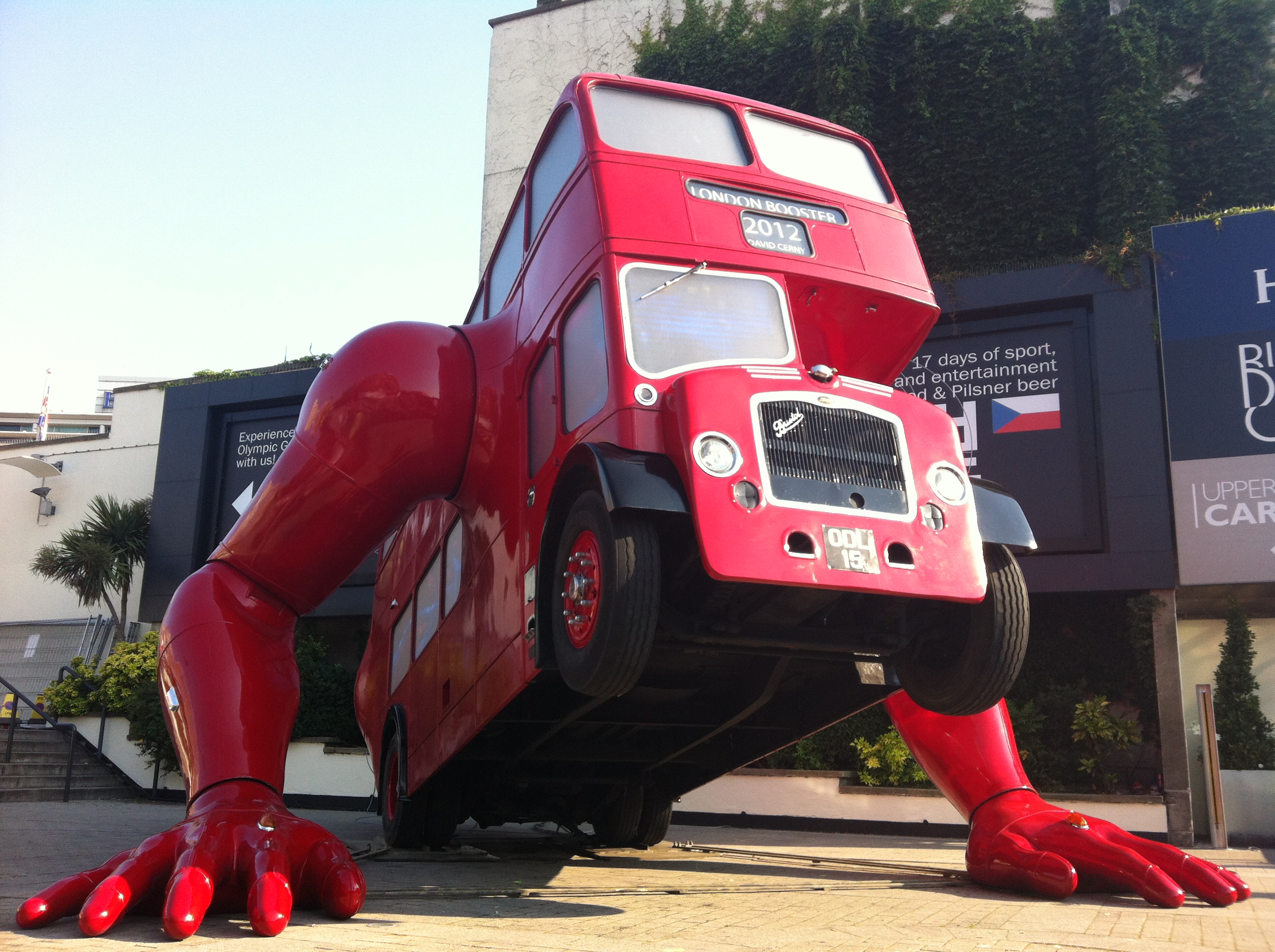
Finally, you could take a look at some of my Olympic snapshots below, from the opening ceremony rehearsal, which really was an incredibly moving spectacle, to images of the Olympic Park, the hockey and handball, the big red London bus doing press-ups in my neighbourhood and the cuddly Olympic mascot, Wenlock.

Thank you to London and Britain for making it all possible and to the world for joining in.

This slideshow requires JavaScript.

Posted in Perfectionism, Positive thinking, Uncategorized, Women | Tagged , , , , , | 1 Comment

Taking the plunge

It’s official. I’m dating again.

I don’t mean dating anyone in particular – now that would be news – but rather I’m back in the dating pool, after some time spent sitting on the sidelines, wrapped up in a robe and flip-flops, looking on as the other swimmers splash around and not even daring to dip my toe in the water.

In November, I blogged that I had called off the search for a partner, husband and father to the children I still (yes still) hope to have. This was a conscious decision to take a leave of absence from the dating game, following a couple of brief relationships that had gone awry and had brought up lots of “issues”.

Well, I’ve done a little bit of exploring around those issues and I have some answers. I’ve identified some self-defeating patterns of behaviour that seem to throw a spanner in the works of any romantic relationship and I’m doing my best to understand them. Of course, I’ve no idea whether I’ll be able to put what I’ve learned into practice. But I won’t know unless I try. And I’m ready to try.

Of course, I might be wrong. I might not be ready. I might need more time to understand myself. But then will I ever be ready? And how will I know? This is a dilemma I explored in a recent blog on a hip new Canadian women’s lifestyle website JustCharlee: To Date Or Not To Date. After some pondering, I’ve concluded I’m going to try dating, slowly and gently. After all, I’m 41 and don’t want to be single forever. (I explored my age, my singleness and the feminism debate in an earlier JustCharlee blog post: 41 and single: Did We Get What We Want Or Forget What We Wanted?).

It seems my most obvious pattern and perhaps the one that’s contributed to my current single status more than any other is what’s referred to in psychological speak as ‘push-pull’ behaviour. This appears to be a common trait of people who fear abandonment, rejection, or being hurt by another, likely because of their own childhood experiences. Out of the Fog, an information site for those dealing with a loved one with a personality disorder, describes push-pull as “a chronic pattern of sabotaging and re-establishing closeness in a relationship without appropriate cause or reason”. I also read a fair amount about the push-pull cycle in the He’s Scared, She’s Scared book (subtitled Understanding the Hidden Fears That Sabotage Your Relationships), which I mentioned on a previous post: Commitment and phobia.

In my case, the pattern seems to be that I draw people to me, allowing them a certain closeness, but then when they get too close, I push them away, sometimes by finding fault with them and magnifying those faults out of all proportion until they drive me completely crazy and I have to leave or force the other person to leave by behaving unbearably. Now I’m aware of the pattern, the key will be to recognise what I’m doing as I’m doing it and to try to suppress the urge to run when it grabs hold of me, at least long enough to give a relationship the chance to get off the ground.

So, that’s the challenge. And I’ve taken the plunge by signing up to the online dating website Guardian Soulmates for six months. In the past, when I’ve done online dating, I’ve only signed up for a month or two and haven’t ever taken it very seriously. I could never bring myself to spend very long online, trawling through those photographs and profiles and trying to find someone I felt like contacting. But I’ve given myself six months so I can take things at a leisurely pace, set some boundaries around how often I visit the site and actually take the time to move on from the email stage to the sitting down for a cup of coffee stage.

That said, I signed up a few weeks ago and have barely looked at the site. Nor have I felt moved to write to the men who’ve ‘liked’ me – a number of whom are in their 50s with grown-up children. I shouldn’t rule anyone out but it’s not exactly what I was hoping for. Of course, as is generally the way, the guys I’ve contacted haven’t written back. Although my page definitely needs a bit of work. It reads more like a job application than a dating profile. According to Guardian Soulmates, I’ve got 1,500 ‘matches’ on the site – men they deem to be compatible with me – so there must be someone I want to go for a coffee with. And if all else fails, I’ll have some good blog/book material (no names mentioned of course!).

Olympic Fever

Completely unrelated to my dating dilemmas – apart perhaps from the ‘Taking the Plunge’ swimming analogy – I just have to express my Olympic fever. It’s well and truly got me. London is all a buzz with Olympic events and millions of people from all over the world, and as long as I don’t have to make too many Tube journeys, it’s clear it’s going to be a great few weeks.

The Olympic exercising bus

I blogged about my Olympic fever on the Huffington Post – From Scepticism to Excitement, Loving the Olympics and It’s Just Getting Started – but I have a new highlight to report since I wrote that post: the big red London double-decker bus that’s doing press-ups in Islington. I saw it this morning and became quite enamoured.

It’s got a pretty good physique, but then so would anyone if they did press-ups for eight hours a day over two weeks. It’s an installation by a Czech artist and it’s already started to draw the crowds.

For the full story, check out this news clip:

Posted in codependency, Dating, Love, Relationships, Self-Acceptance, Uncategorized, Women | Tagged , , , , , | 12 Comments

Can women have it all?

It seems the debate about whether women can have it all – the career and the family – just won’t go away, which isn’t a bad thing, because it’s a debate I find fascinating and that I very much want to be a part of.

And it’s a debate that was on my mind yesterday as I spoke to several groups of teenagers in an inner city London comprehensive girls’ school at a careers’ day, trying to strike the right balance between inspiring them to reach for the skies and nudging them to make conscious choices about their personal lives.

In the end, I decided they were too young to hear some of what I thought I was going to say. Aside from talking about the pros and cons of a career in journalism – the excitement and adventure as well as the long hours and high stress – I thought I’d talk a little about how my own career focus and drive to achieve had, in part (as it’s by no means entirely to blame), brought me to where I am today: 41, single, childless and wondering if I’ll ever be a mum.

But those words didn’t want to come out. In the end, it didn’t seem appropriate to stray too far from the topic in hand. Perhaps I thought they were too young – aged 15 to 16 – to hear my musings on the ‘can women have it all?’ debate.

So I focused on trying to give an accurate picture of a career in journalism, based on my own experience as an international print journalist and on the careers of other people I know who chose regional or broadcast news. I talked about the highs of travelling to exotic places, flying in helicopters and mingling with VIPs. And I talked about the lows around long hours, disrupted weekends, tight deadlines and stress.

As it turns out, though, the girls weren’t too young to be thinking about families. And maybe they read between the lines. One of them asked whether such an apparently all-consuming career was conducive to settling down and raising children. Another asked what I felt I had given up or missed out on by dedicating so much time and energy to my career.

In my 20s and early 30s, I said, I didn’t think I was giving up or missing out on anything. Today, I see things differently. Perhaps I’d given up the opportunity to have children – I was 41, single and childless, I said. But nor is my story that simple, I added. It was never a straight career or family choice. There were lots of other circumstances that contributed to my current status.

But my school experience has definitely left me wondering where the balance lies. Do we encourage young women, particularly those from under-privileged backgrounds, to aim high, climb the career ladder and postpone families until later in life – in other words, tell them ‘yes, you can have it all’? Or do we suggest they think about whether having children is important to them and advise them to factor that in? And then how can you plan that kind of thing? Often, the timing isn’t ours to control.

But if we tell them to put babies on the back burner until they’re professionally fulfilled and financially secure, are we condemning them to the endless rounds of painful and often fruitless fertility treatment that so many women my age are going through? And when is the right time to start having these conversations? I remember a time in my teens when friends and I would discuss when we’d settle down and have babies – I recall we thought our late twenties was a good time. But my twenties came and went as I pursued my career and partied hard in Mexico and Brazil. Those baby conversations were quickly forgotten.

In my case, then, I haven’t had it all (family and career), although there is still time. But it seems women who’ve done a much better job than me at trying to have it all aren’t succeeding either. If you’ve got time, check out an article in The Atlantic magazine (it’s pretty long – I haven’t finished it myself yet!) by Anne-Marie Slaughter, a former U.S. State Department high-flyer who walked away from her post to spend more time with her teenage sons. It’s entitled Why Women Still Can’t Have It All and in it she asks whether feminists have sold young women a lie.

The patter of tiny feet

And once you’ve finished that or before that if you prefer, read blogger Penelope Trunk’s take on Marissa Mayer’s decision to take just two weeks maternity leave so she can return to her new high-powered post at Yahoo: Marissa Mayer becomes CEO of Yahoo and proves women cannot have it all. Now I’ve never given birth and I know I shouldn’t judge other women’s choices. And I can imagine, if I’d have had a baby at the height of my Reuters journalism career, I might have wanted to get back to work after two weeks also. But today the idea of giving birth and then heading back to work and leaving a two-week old baby at home doesn’t sit too well with me. Penelope Trunk is a little more strident in her views. Here’s a flavour:

“The most revolutionary thing you can do for women right now is to stop celebrating women who choose to work 120 hours a week when they have a new baby. It’s been forty years since we have been able to say publicly that someone needs to stay home with a baby, forty years of feminism rammed down everyone’s throat.”

As the debate continues to rage – in my head as well as in the media – I guess the best thing we can do is to speak our truth, make sure young women have access to all the information they need, about career and personal choices, and then let them make up their own minds.

Posted in Pregnancy, Relationships, Uncategorized, Women, Work | Tagged , , , , , , | 4 Comments

Shifting the status quo

Some of you may not have heard of the ageing British rock band Status Quo, particularly if you’re not from around these parts (Britain, I mean). But with an aspiring rock star for a brother and a mother with a soft spot for lead singer Francis Rossi, Status Quo had a special place in my family home as I was growing up. And that kind of stuff stays with you, even if your music tastes change.

So I was quite happy to make the trek across London to Kew Gardens on Tuesday evening with a picnic dinner in my backpack, despite the prospect of yet more downpours. Nor did I mind planting my rug on the wet, muddy grass or eating soggy crisps (only in Britain would so many people choose to picnic in the rain) as a friend and I waited for the main act to come on.

And as they did, the showers went off and the skies cleared.

But despite the entertainment, the surroundings and sense of occasion, there was a time during the concert that I found myself questioning why I always find it so difficult to be present. Here I was, listening to some great live music by a legendary rock band in a rather beautiful setting. But Status Quo only had a portion of my attention.

I seemed to be super alert to everyone around me – whether they might stand on my toes or trip over my bag or stumble drunkenly into me. Is this something to do with getting older, or staying off the booze? Not only that but part of my brain kept wandering off to other things, perhaps to whether I’d make my last train home, or my list of things to do the next day or whether my feet were wet. This is annoying, I thought. I’d really like to be present. All these other people around me seem to be present. Why can’t I be present?

But as the Quo, as they’re affectionately known to their fans, played more of the old favourites – ‘You’re in the Army now’, ‘What You’re Proposing’ and ‘Down, Down, Deeper ‘n Down’, they started to grab my full attention, except for a few moments I took out from singing along to take some poor quality video for posterity….

And as it grew dark and they got close to the finale and played their classic hit ‘Rockin’ All Over the World’, I forgot all that other stuff – the sadness, the loneliness, the journey home, the list of things to do, the career dilemmas. And I began to sing, dance and jump up and down with the rest of the crowd.

I didn’t care if anyone stood on my toes or I on theirs or whether my backpack was safe. I was totally present. I was alive, fully engaged in an activity I love. Perhaps for those few minutes, I remembered who I was – without the baggage, without the fear, without the constant self-analysis – and what I really enjoy. My ever-thinking brain switched off. I was having fun.

And in that moment, everything was possible and nothing mattered. I wonder if the Quo realise what a profound effect that song had on one person in the crowd.

I’m not sure if it’s got anything to do with that precious moment when I jigged and sang along to ‘Rockin’ All Over the World’ but the next day I started to work on my book. Yes, the book I’ve been talking about for months on this blog, the book I’ve been planning in my head ever since From Forty With Love went live, the book I’ve procrastinated over, questioned and talked myself out of on numerous occasions. The book that’ll tell part of my story and that of other women facing the issues and challenges of this particular age in our lives and will hopefully inform and entertain many others who will walk the same path.

So I’ve begun writing my synopsis – a serious one that I can send to agents. It’s scary, fun and exciting. It’s a dream, a dream that might not come true but that will always be there and is worth fighting for rather than brushing under the carpet and trampling on.

I imagine it’s not going to be easy. I’ve written a lot on this site about perfectionism, procrastination (and here I am blogging rather than book writing!), a lack of self-belief, fear of being judged, fear of failure, fear of success, indecision, codependency, workaholism, a lack of work/life balance, commitment phobia and so forth. All these issues are going to come into play. But something else has clicked in the last few days: the realisation that life doesn’t have to be a struggle, it doesn’t have to be about hardship – the journey can in fact be a pleasant one.

Things don’t have to be the same as they have always been. We can shift the status quo.

It seemed appropriate, then, that I spotted Marianne Williamson‘s well-known poem this morning – the one made famous by Nelson Mandela – pinned up on a crammed noticeboard in my bedroom. I’m sure you’ll know it as well as I do and perhaps it’s become overused, a cliché almost, in this age of self-discovery, personal development and life coaching.

But it still speaks to me on a very deep level, so I’ll write it out here, just in case it touches someone else today who shares these fears and needs some encouragement to shine.

“Our deepest fear is not that we are inadequate. Our deepest fear is that we are powerful beyond measure. It is our light, not our darkness that most frightens us. We ask ourselves, Who am I to be brilliant, gorgeous, talented, fabulous? Actually, who are you not to be? You are a child of God. Your playing small does not serve the world. There is nothing enlightened about shrinking so that other people won’t feel insecure around you. We are all meant to shine, as children do. We were born to make manifest the glory of God that is within us. It’s not just in some of us; it’s in everyone. And as we let our own light shine, we unconsciously give other people permission to do the same. As we are liberated from our own fear, our presence automatically liberates others.”

– Marianne Williamson, A Return to Love

Posted in Leisure, Uncategorized, Women | Tagged , , , | Leave a comment