Dreaming of greatness

mandela“There is no passion to be found playing small – in settling for a life that is less than the one you are capable of living” – Nelson Mandela, 1918-2013.

Of all the inspiring Mandela quotes I’ve read since his death, this one moved me the most. Partly because it was spoken by a man who did everything possible to live the life he was capable of living and to encourage others to do the same. But also because I came across it just as I was pondering what it takes to live to our potential and what differentiates those who achieve what they are capable of achieving from those who struggle to do so or don’t even dream of trying.

And how do we know or measure what we’re capable of anyway? Do we take into account the cost to ourselves or to others of achieving this potential? Or do we gauge our potential by looking at what we can achieve without harming or abandoning ourselves or others in the process? Should we look at our potential as that which we are capable of doing while maintaining our peace of mind, being kind to ourselves and others and enjoying our lives?

Why so many questions and why now? Well, these questions came to me last week when I was helping out at a women’s rights conference hosted by Thomson Reuters Foundation. Over the course of two days, I was blown away by the level of passion, commitment and dedication to a cause shown by the long line of women’s rights activists, writers, photojournalists, documentary film makers, anti-slavery campaigners, lawyers, prosecutors and human trafficking survivors, amongst others, who took to the stage. Here were people who, to my eyes, were living to their potential, passionate about their work, inspired to change the status quo and who were actually making a difference, rather than merely thinking about it. They were game changers, if you’ll excuse the jargon.

And there I was, in the audience, doing work which I felt was a fair way beneath my potential. I was live blogging the sessions for a small audience and capturing the best quotes to use in video wrap-ups. I couldn’t help but wonder why I wasn’t on the stage, talking about an impact I had made or a cause I had championed to great effect. I have passion, I have a desire to make a difference and I have plenty of skills. Why wasn’t I putting them to better use? Why was I observing and documenting instead of doing? Why was I, to use Mandela’s words, settling for a life or for work that was less than what I was capable of? And what would it take for me to achieve my potential?

But I wasn’t just impressed by the speakers – I was also a little bemused by them. Because so many of these people were not only making a difference, using their gifts and talents to expose injustice or help those less fortunate than themselves, but they also had rings on their fingers – engagement and wedding rings – not to mention children back home.

OK, so this may seem a strange thing to notice but it’s not the first time I’ve felt utterly in awe of a person’s ability not only to do game changing work, but also to have managed to have found a partner, committed to a relationship and had a family. Why? Because each one of these things on its own seems such a momentous achievement to me – never mind both at the same time. How do they do it?

That said, I’ve learned enough over the past years to know it’s unwise to compare my insides to other people’s outsides. None of us know what goes on behind closed doors, what condition other people’s relationships are in, how much their dedication to their work has jeopardised or damaged their personal lives. It’s all too easy to assume a sharp suit, a successful cause, a number of published books or a sparkling ring equate to a contented professional and personal life.

But it’s not always the case.

Perhaps some of the passion, commitment, dedication and achievement I witnessed at that event came at a cost. Indeed, I have come across enough people who have been brave enough to share the reality of what lay behind a façade of achievement or success. And I’m prompted to ponder the impact Mandela’s indisputable political and social legacy had on his closest personal relationships, particularly his children.

Do some of those people who are out there making a difference harm those close to them – their partners and offspring – because they never see them or have time for them? Does living to one’s potential always come at a cost? And is the price worth paying in some cases? Or can you live to your potential, be true to yourself, avoid self-harm and avoid harming others? How do you strike that balance?

And how do we know how high to aim? We’re not all destined to be like Mandela – to change the course of history. Is it enough to love and be loved, to find contentment, to bring up children (if we have them)? Is it enough simply to enjoy our lives, if that’s something we struggle to do?

Besides those questions, though, I’m left wondering what makes a man like Mandela? What is it that makes the difference between those who go on to do great things and those who only dream of them or never dare to dream of them? Self-belief, self-discipline, persistence, motivation? Faith, healthy self-esteem, good parenting, great support? I imagine one needs a strong sense of self, a solid core, an inner strength and perhaps a great sense of humour to truly explore one’s potential, particularly in the face of adversity.

But whatever it takes, I question whether I’ve got it. Have I got what it takes to live, in Mandela’s words, “the life I am capable of living”? Have I got what it takes to do this without paying a price? And what does that life look like anyway?

Years ago, I was living and working in a way that, from the outside, must have looked like I was achieving my potential. Living abroad, working as a foreign correspondent, travelling the globe with prime ministers, using my gift for languages, covering extraordinary news events from the Asian tsunami to the Haitian earthquake.

But even when I was out there doing that, I never felt I was working to my potential. In fact, I know I shied away from it. From those years of foreign travel and extraordinary access to momentous global events, I can count the stories I’m truly proud of on one hand, or perhaps two. They’re the stories that took guts, initiative, imagination and emotional risk-taking (I was always good at taking physical risks – jumping out of planes, hitch hiking alone – but not the emotional ones). But there were too few of those stories, despite there being so many opportunities. I’m sad to think I had the Amazon on my doorstep, with all the wealth of possible features contained therein, and I was too scared to aim high, to suggest exciting stories, to plan interesting trips and come back with great ideas. My reporting was reactive. I did what I was told – and I did it really well – but I rarely ventured outside my comfort zone. I rarely did the work I really wanted to do. I had plenty of ideas, many moments of inspiration but I was held back – by fear, by a sense my work would never be good enough, by a deep-seated belief that I was an imposter on the verge of being found out.

Then in the final years of my work as a jetsetting political correspondent, I uncovered a truth I’d been hiding for quite a while – that I was in that job because I thought others expected great things of me. I was doing it to impress people, to give myself an external status because I felt so undeserving on the inside. Perhaps to be someone others would feel wowed by, inspired by and even write a blog about out.

And all the while, whether I was achieving my potential or not, the cost was high. I was too scared of making a mistake, of getting it wrong, of being judged; too mistrustful of myself; too doubting of my abilities. I climbed high in my profession with the help of a number of crutches that got me through the stress, smothered my anxiety and compensated for my low self-esteem: primarily unhealthy, compulsive, destructive behaviours around food (bingeing, starving, overexercising) but also around alcohol, work and other people. In short, I completely abandoned myself.

Looking back over those years has got me thinking about my time at Oxford University. I remember telling my tutor towards the end of my final year that I wanted to be a journalist – apply for a masters in journalism or to the Reuters or BBC trainee schemes. She told me I wouldn’t make it. I hadn’t done any journalism at Oxford so they wouldn’t look at me, she said. She didn’t have any other suggestions, as far I recall, but the careers advisory service did. After completing a test and having a chat, a university careers’ advisor suggested I consider working in insurance and perhaps returning to Liverpool. ‘You must be crazy’, I thought. ‘I’m destined for great things! I’m not going back to Liverpool. I’m moving forward.’ And off I went, around the world.

I use those two examples when I speak to teenagers in schools about how you should never let anyone understimate you or suggest you’re not capable of achieving what you want to achieve. After all, I went on to work for Reuters as a foreign correspondent – exactly what I’d been aiming for.

But I can’t help thinking whether perhaps those advisors had the measure of me. After all, the cost of achieving my dreams turned out to be pretty high. I couldn’t – at the time and perhaps not even today – get where I got without addiction, without self-harming or using crutches to try and compensate for my feelings of inadequacy and low self-worth.

All this leaves me wondering what my potential is today and how to achieve it, without having to pay a high price. I want to write, teach, coach, inspire and give of myself. But I also want to feel peace, joy, love and be content with who I am and what I have. I want to work hard and live the life I’m capable of living, but I don’t want to harm myself in the process or sabotage my personal life or my emotional or spiritual wellbeing. How can I do that? Is it even possible?

But perhaps there is a way. Perhaps I need to take everything more slowly and more gently than I’d ever have imagined. Perhaps I have to keep stopping and checking in with myself, asking myself what I need to be healthy and happy and being bold enough to respect the answers. Perhaps if I do that, I will achieve my potential without a cost. And maybe as I continue to honour who I am and what I need in order to feel peace and experience wellbeing, things will flow, without effort, struggle or strain. I can only experiment, step out a little, pull back a bit, accept the mistakes I’ll make along the way and keep nudging at the boundaries, while always respecting myself and my vulnerabilities.

As an aside, I wrote some of this post in my head (and dictated it into my iPhone) as I wandered alone across Hampstead Heath in the autumn sunshine on Sunday morning. As I pondered my potential, who I was and what I wanted to do or be, and what made great men and women great, I said to myself, ‘I’m inspired to write.’ Because I was. It felt true, it felt real, it came from my heart and soul. But then if I didn’t write, would it matter? I could let this blog slide. I haven’t written for over a month (travel, holiday, ear infection, food poisoning, amongst other reasons). I could let the ideas, the words and phrases come and go without ever sharing them. Nobody would be any the wiser. No big deal.

But I am inspired to write (all 2,000 words of this post!). And perhaps all I have to do is listen to that and go along with it, slowly and gently.
Posted in Addiction, Creativity, Faith, Happiness, Recovery, Women, Work | Tagged , , | 3 Comments

The other me

Sometimes the best blogs are the ones I don’t post – at least not immediately. I wrote the below blog (the indented paragraphs) seven days ago, aside from a bit of tidying up today. I wasn’t going to post it at all but having re-read it, I think it’s worth publishing as it reminds me how much can change in a week.

I’m in quite a different place to when I wrote this. But more of that at the end …

There’s this other me. She looks like me, although perhaps she’s a bit longer and leaner. She sounds like me, although maybe she speaks a little softer (my friends are often politely asking me to pipe down in restaurants). But she thinks and acts differently.

Her life flows, she makes decisions with ease and without stress and follows through on them. She honours her hopes and dreams and behaves consistently towards herself and others. She squeezes joy out of every day. She doesn’t exhaust herself with endless rumination.

Right now, I’d love to be that other me. Because despite everything I’ve learned and written about self-acceptance, I’m not getting on too well with the real me. I’m frustrated with her, tired of her, angry with her. I’ve had it with her.

I want to keep the bits of her that dream – that ambitious side of her that wants a bigger life, that wants to put her gifts to use in a way that brings her joy and is of benefit to others, that imagines a life filled with love, peace and creativity.

But I want to lose the other side – the stress, the worry, the indecision, the rumination, the low self-esteem, the insecurity and the fear. The fear of living, of choosing, of risking; the fear of people, of death, of life; the fear of saying no to others, of saying yes to myself; the fear of hurting and being hurt; the fear of poverty and homelessness (yes, despite my relative wealth – I’m a home owner in London – that’s a deep-rooted one); the fear of failure but, more importantly, the fear of success.

I want to lose that side of me – all of it. If I had a cleaver, I’d cut it off, chop it into tiny pieces and discard it, or burn it and sprinkle the ash in the Thames. Extreme? Yes, but that’s how I’m feeling right now.

Sometimes I think I used to be this other me and that I’ve lost her, but maybe I’ve always been like this – I just had some pretty efficient, albeit self-harming, mechanisms to turn me into someone else in the past. But they stopped working or I chose to give them up.

And as much as I love and cherish much of what I’ve uncovered since, right now I despise the other part. I’m so bored of it – the way it drags me down, exhausts me, robs me of hours of my day or nights of sleep, leaves grey circles under my eyes or furrows on my brow.

I’ve even taken to thinking, once again, there must be a pill that can turn me into that other me, take away the worry and anxiety, remove big obstacles that seem to sit in the middle of my path – generally put there by me – blocking out the sunlight, forcing me to take unpleasant detours. Maybe there’s a pill that can give me the impetus to hurdle those obstacles, or smash through them. Maybe there is – maybe I’ll try. But would that be me? Would that restore me to who I think I should be, turn me into who I hope to be? Or would that produce a false me – a me who constantly questions whether it’s her who’s hurdling the obstacles or whether it’s a chemically enhanced version, someone that could never truly be her …

That’s as far as I got a week ago and although it might sound self-punishing, self-critical and self-harming in parts, not very self-accepting, I can tell you it was cathartic to write at the time. It brought my anger and frustration right to the surface and triggered some healing tears. It showed me the real power of words – at least for me.

And seven days later, as I sit here feeling much calmer, more self-accepting and quite loving towards the me I wanted to chop into pieces a week ago, it’s really good to read.

So what’s changed? Well, I’ve made a lot of the decisions I was grappling with and I’ve discovered some really useful tools to help me make those decisions – most importantly, other people. I’ve shared my concerns, my worries and my constant to-ing and fro-ing with friends and then I’ve given myself some time to reflect.

But even more importantly, I’ve come to a better understanding of myself and how I function. I used to like to be in perpetual motion, to make decisions quickly, get things sorted, done and dusted, out of the way. But it’s becoming apparent that I need a good amount of time to process feelings and information.

I am capable of making good choices for myself – yes, I am – but not immediately and not under pressure, from myself or others.

The other interesting discovery is that these deadlines I so often give myself when it comes to choices generally do not need to be respected. Yes, there are practicalities that need to be considered when it comes to certain choices but I don’t have to hurry everything. I can take time to reflect. And while consideration of others is important, I’ve learned it’s vital to ask myself what is right for me and use that as my starting point. It’s when I throw everyone else’s potential feelings and opinions into the mix that I get muddled. And that muddle, after a while, turns to paralysis.

On the other hand, it’s also interesting to look at how much time I spend on decisions that generally don’t matter a great deal. This was pointed out to me on Saturday by a sales assistant in a shoe shop as I returned a pair of boots and tried on a few others. Indecision takes up a lot of time. Maybe I wasn’t ready to make a decision in that moment. Maybe I didn’t have all the information. (I’m pleased to say that in the end, I bought some boots.)

All this is really useful information for myself for the future and I hope I can take it into account. And as I’m sitting here, a number of choices under my belt, I do wonder what all the fuss was about.

But I don’t want to dismiss or chop off that other side of me anymore. And I have compassion for it. And as a dear friend said with a laugh the other day as I imagined this other me, floating through life with no stress, worry, indecision or fear, “you’d have no mates if you were like that!”

Because I’ve also discovered I’m not the only one who struggles with this stuff. And if you don’t, you’ll likely struggle with other stuff that I might find a breeze. Strengths and weaknesses. That’s why we need each other.

So I can temper that side of me that stresses and worries by understanding the core issues at the root of my rumination and indecision, but I can also accept it, try to understand it, find tools to make it easier to deal with and, ultimately, embrace it. With a big, warm-hearted hug.

Because it’s part of me.

It’s as much a part of me as the part that propelled me this lunchtime – yes, November 4th – into the sea off the coast of Dorset (without a wetsuit) for an icy cold but glorious swim as the sun shone.

From the sand, the water looked amazing and enticing and I knew I’d enjoy a dip but initially I was put off by the walkers, all wrapped up in coats and scarves. What would they think? They’d point and say I was crazy? I was more deterred by other people’s opinions than the prospect of blue toes.

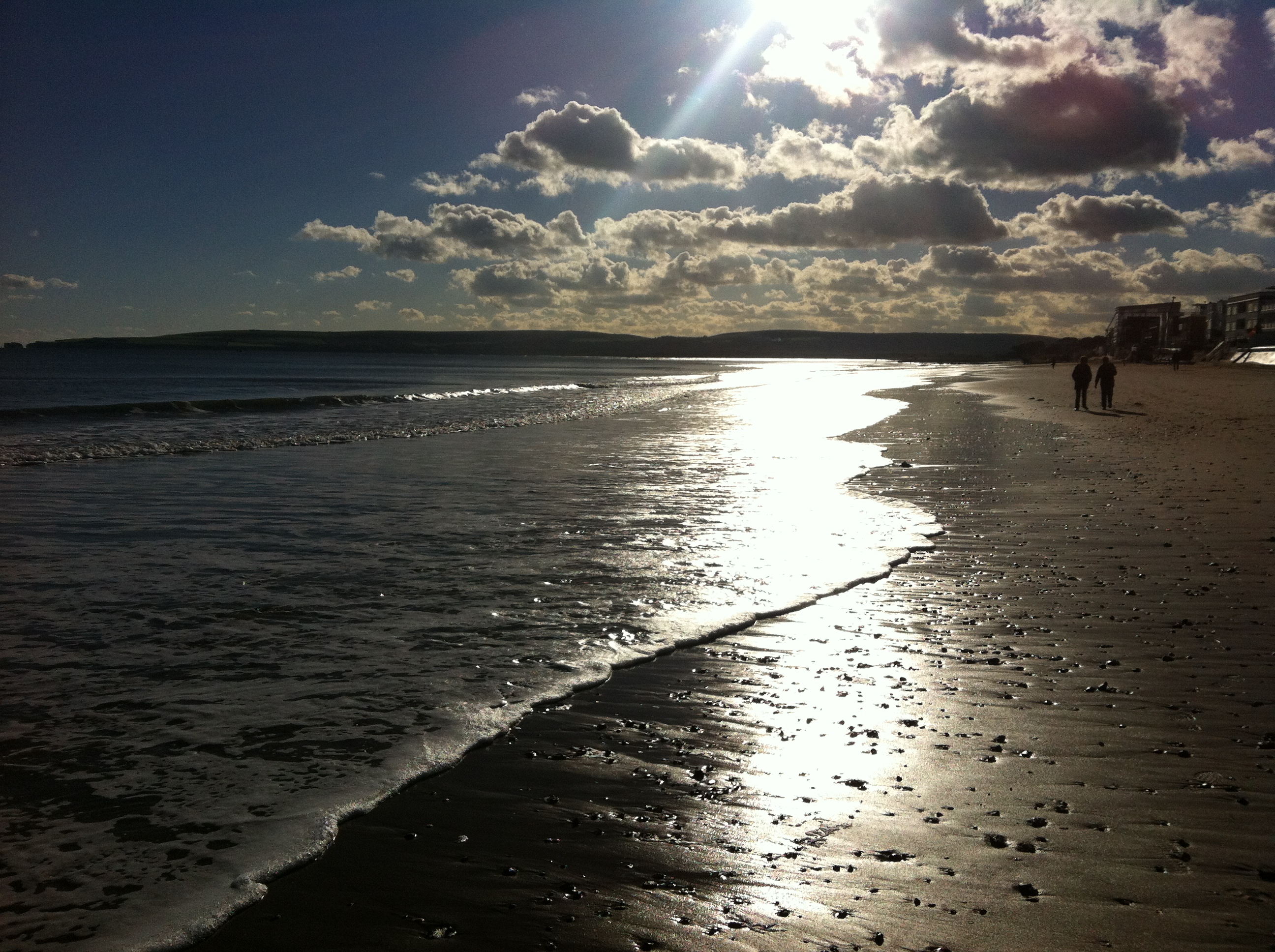
Sunshine on the beach

Sunshine on the beach

And then a jogger arrived, stripped down to his shorts and walked in as though it was the Mediterranean in August. I thank that man. Yes, people pointed and I’m sure the word ‘crazy’ was uttered a few times. But I didn’t see a crazy man – I saw the most sane person on the beach!

So in I went. And as I put my head under and did a few strokes, my whole body came alive, my heart filled with joy and I felt like a child again. All the worries – all the shoulds and musts – dissolved as I swam on my back looking up at the sun. And I’m still feeling the benefits seven hours later.

In that moment, the decision I made to move out of my flat for a month to explore living at the beach and to go on holiday – which seemed completely insane as I frantically packed up my flat on Saturday and got on a late night bus and train – felt like the best choice I’d made all year.

And that cold dip also confirmed what I already knew – that I really am moving to the sea.


Posted in Leisure, Recovery, Self-Acceptance, Women | Tagged , , , , , , | 7 Comments

Ode to London: I love you, but …

There are so many things I love about London but I’m going to have to start with my friends.

For someone of my age, stage and relationship status living in such a huge metropolis, friends become family. They’re whom we call when we find ourselves unexpectedly in hospital, or when we lose our purse, our keys, our boyfriend or our mind. I’d be lost without my London friends – I love my non-London friends too, but this vast and sometimes lonely city means us Londoners form a special bond.

What else do I love? I can draw on so many images. Like scootering or cycling at night across Waterloo or Blackfriars Bridge and taking in the river and the buildings on either side – St Paul’s, the London Eye, the Houses of Parliament, the Tate Modern – all lit up, majestic and imposing. That scene never fails to take my breath away and it always reminds me how privileged I am to live here.

Or biking along the disused railway track from Finsbury Park to Highgate and up the hill to the top of the Heath. Stopping to take in the view from Kenwood House or speeding downhill and taking a sharp right turn towards the duck pond. Sitting on a bench admiring the colours of the trees – they always look picture postcard-perfect and warm my heart, whatever the season.

Swimming with the ducks at Kenwood Ladies' Pond

Swimming with the ducks at Kenwood Ladies’ Pond

Or lying in the late evening sun at the Ladies’ Pond, overhearing snippets of conversations from the beautiful, half-naked women all around me – their passions, dreams, worries, frustrations, loves (lost and found), their heartache, depression and joy – or having similar chats with my half-dressed pals (there’s something so freeing and disarming about nude chit-chat, if you know what I mean). Or hearing ladies laugh as they lower themselves gently into the cold water or jump off the platform with a shriek.

Then there are the other open spaces – the deer and ducks in nearby Clissold Park, the roses and fountains of Regent’s and the vast expanse of Hyde Park, which is often host to huge concerts that end with magnificent fireworks displays.

Or those moments inside the Tube or on the Southbank when I stumble across a busker with extraordinary talent, like Susana Silva from Portugal, who lifted my spirits and moved me to tears when I heard her sing by the river one evening.

There’s the eclectic mix of races and cultures into which I so easily fit sometimes – I can practice my Spanish or Portuguese and relive my Latin American years. I can nip down to Tito’s salsa bar at London Bridge, where it’s perfectly acceptable – and fun – to show up on your own. There are colours, flavours and music from all over the world around every corner – eateries, music venues, art classes and dance halls tucked away.

Then there’s the huge recovery community – the myriad of support groups for those of us struggling with addictive, compulsive behaviours. This underground world of church halls and meeting rooms has, in a way, saved my life – it’s shown me I don’t have to live in bondage to food, weight, exercise, compulsive work, people-pleasing, obsessive thinking, or doom and gloom. It’s shown me how to thrive – not just survive – and taught me about spirituality, love, freedom, service and the power of asking for help and helping others. On top of that, there’s my church community, a wonderful mix of people and stories and a space where I can sing out loud, find peace and feel part of a family.

And of course, there’s my little flat. The first home I’ve ever owned and a place of safety, belonging and peace and quiet over the past 11 years, aside from the odd interlude of neighbour noise. I’ve lived here longer than I’ve lived anywhere. It seems I spent decades moving around, never making home, but in London, I stood still. No wonder I feel so attached to my cosy, attic apartment, with its wall of windows, views of treetops and spires and abundance of daylight. Will I ever feel so at home?

But there are things about this metropolis I can’t say I love.

Although the Tube’s fast, I have a deep dislike for travelling underground (aside for the odd encounter with a talented busker). And I don’t like the fact many of my friends live on other sides of the city and that we all have such busy lives. These days, too many of my close friendships are conducted mostly over the phone – usually when one or both of us is walking to public transport, washing up or preparing food. Of course, there are the dinners and drinks and cinema visits but they take planning and they’re all too rare. And sometimes the prospect of bracing crowds or taking long journeys on public transport requires more energy than I’m prepared to muster. Perhaps I’m getting old.

And while London’s parks, greenery and cycle lanes seemed like a Godsend a decade ago after the congestion and concrete of Mexico City and Sao Paulo – millions of people and one major park each – or the dryness of Brasilia, London’s open spaces don’t feel so open anymore.

So my heart, soul, body and mind are yearning for space, for a different panorama. I long to be by the sea and closer to Nature; to get out on my bike after a day’s work and go further than the local park; to swim in open water without having to scooter to Hampstead’s ponds; to spend the weekends in the countryside without first taking buses, Tubes, trains or negotiating traffic; and I long for a different pace of life.

You’ll be pleased to hear I know I take myself with me wherever I go and I’m aware I could be doing what’s known in the therapy world as a ‘geographical’ – thinking a change on the outside will fix the inside.

It’s clear to me that some of my battles with London are of my own making – poor time management, over-working, bad planning, under-earning so I can’t get out as much as I’d like or afford a car, and so forth. That’s stuff I’m going to have to deal with wherever I go.

The wide open spaces of North Wales

The wide open spaces of North Wales

But having just had a few days among the hills and beaches of North Wales and after spending most of the summer in Dorset by the sea, I know there’s a voice inside me that deserves to be listened to and a desire of my heart that I’d like to honour – even if it turns out I was wrong. Because I can always come back – London will still be here.

It’s the sea that’s calling me more than anything else. I grew up in Liverpool, a short walk from the open spaces of Otterspool Promenade – on the banks of the River Mersey, which opens into the sea. It isn’t quite Sydney or St. Tropez, but the coast was never far away and we spent summer days in Blackpool, Southport and Crosby and weeks by the beach in North Wales. I began my days not far from the sea and I can’t imagine going any further from it than I am today.

Leaving London won’t be easy, which is why I’ve only talked about it for the past few years and never made the move. Perhaps more than many, I struggle with indecision and ambivalence, with a push-pull inside me. There’s an urge to go but a desire to stay. There are the pros of moving but I can write a cons list just as long. But when I ask myself which bit is the head – the worry, the fear, the self-doubt – and which bit is the heart – the faith, the trust, the excitement – the answer comes back loud and clear.

There’ll be so much I’ll miss – too much to even write about here – and I know there’ll be times when I’ll feel lost and lonely. But I have those times in London too, more often than I care to admit. The crowds, the buzz, the packed cafés, the queues and the endless list of things to do make me feel I’m at the centre of the action, that I belong to a big club, to the London family. But on many occasions, I’m walking through the crowds on my own or peering into restaurant windows before eating alone at home.

Perhaps that’s what’s changed, at least enough for me to countenance a move to a quieter place. More than ever before – although not as often as I’d like – I’m finding a sense of belonging within myself. I don’t need to be surrounded by people to feel safe and at home.

Looking back, it doesn’t surprise me I spent my most turbulent years – the years of bingeing, starving, binge drinking, compulsive exercising, low self-esteem and self-harm – in some of the biggest and busiest cities of the world. Maybe being at the centre of things reassured me I was OK inside, that I was safe and special. But I also recall leaving the buzz of trendy Sao Paulo – dubbed the New York of South America – for the smaller, quieter and rather odd city of Brasilia and finding contentment running around its parks, windsurfing on its lake and hiking on weekends in a nearby national park.

In one way, I’m surprised it’s taken me so long to find the courage to move given I’ve packed up my life and crossed continents so many times. But I also understand why. While most of the time I’m aware of the amazing opportunities ahead of me and feel full of life and young at heart, I have moments when I think the years are slipping away and I’m running out of time. Playing it safe, not listening to the part of me that longs for change, seems easier sometimes.

But holding on to that idea of a life of opportunity, I have a dream to follow my heart to the sea, to write, to teach, to love, to cycle, to swim, to jump off rocks into the water, to stretch on the sand, to have endless visits from my lovely London friends (please), to have more spare time, a slower pace of life, more space to create and to make my heart and spirit sing – in a small or a big way – every day.

We’re told it’s good to write down our dreams and goals so there you go. But while it feels brave to do so, it’s also terrifying. Because I guess now I have to follow through.

So, Dear London, I love you … but I’m leaving.

It’ll take time to sort – I’m not sure exactly which bit of the sea I’m going to yet! But I’m going to prepare for change, find out some information, knock on some doors then surrender the outcome, trusting I’ll be led in the right direction.

In the meantime, I’d better post this fast before I change it to, ‘Dear London, I love you … but I think I’m leaving, maybe, perhaps, some day …’

In my element - after a dip in the sea this summer in Dorset

In my element – after a dip in the sea in Dorset

Posted in Addiction, codependency, Faith, Happiness, Health, Recovery, Spirituality, Women | Tagged , , , , , , , , , , | 7 Comments

Cultivating compassion

I just starting rereading my last blog post and I couldn’t get to the end, so if you did, congratulations and thanks for staying with me! But I’m thinking that perhaps it’d be good to write shorter posts, but blog more frequently. It doesn’t have to be a magnum opus or a lengthy brain-drain.

So let’s give that a go, shall we?

Last night, I wrote myself a letter.

I didn’t want to, but someone who knows me well and has my best interests at heart thought it would be a good idea to write a loving letter to myself, given I’d been struggling for a while with a whole set of difficult emotions – grief, loss, sadness – and giving myself a hard time for not getting over them or for exposing myself to them in the first place.

She also suggested the letter because I’d realised I’d probably made a mistake or an error of judgement with my work and was just about to head down a self-critical, self-punishing path that would have involved me calling myself every name under the sun and questioning how I could have been so foolish. I was stopped in my tracks, told to put down the stick I was about to clobber myself with and to pick up a pen and paper.

The goal of the letter was to develop qualities of inner compassion or, in simpler terms, to learn to be kind to myself. As I started off (Dear Katherine … ), I began by acknowledging that writing a compassionate letter to myself was, for me, extremely challenging because self-acceptance and understanding did not come easy. I noted that I’d always been a striver, a fighter and that showing myself compassion felt like weakness, like I was letting up on the fight. But I also noted it was OK to struggle like this.

I went on to acknowledge that it wasn’t surprising that I made some of the choices I did, that I felt things at such a deep level and that I struggled to overcome pain, loss and grief. I noted that pretty much every part of me – every feeling, every reaction, every choice – had a connection to my past and to a deep sense of loss, insecurity, low self-esteem and fear.

It’s normal to feel sad and to grieve, I told myself; it’s understandable to feel angry with myself when I don’t do things ‘perfectly’ or to want to punish myself when I get things ‘wrong’; it’s natural to want to stay sad and to stay stuck, to not want to change; and it’s understandable to want so desperately to be loved and to feel special – because there was a time when the little child within me felt deprived of that.

My letter ended with me acknowledging how well I’d done that day – I’d been to the dentist, done a full day’s work and reached out to get support – and with me acknowledging how well I was doing overall.

“You’re doing really, really well,” I wrote through tears. “And your joy and your inner sparkle will come back soon. This too shall pass. Take it easy on yourself. Love, Katherine.”

To be honest, before I started writing, I thought this letter wouldn’t touch the sides. I didn’t think I could tap into any compassion and if I did, I didn’t think it would make a difference to how I was feeling.

But it did. Just the act of sitting down and being gentle with myself – instead of engaging in the much more familiar pattern of self-criticism – brought tears to my eyes and accepting how hard it was for me to be kind to myself felt like a giant leap in the right direction.

Perhaps I can do this more often – write myself a compassionate letter or at least speak to myself in a compassionate, gentle and accepting way.

I hope so. I think I deserve it. And I think you deserve it too.

So there you have it. Short and sweet at less than 700 words. Maybe that’s an act of kindness too – both to me and to you!


Posted in Recovery, Self-Acceptance, Women | Tagged , , , | 3 Comments

Baking my way back

It’s been more than three weeks since I’ve posted on this blog and I’m hoping you’ve all been having such a wonderful summer that you haven’t noticed my absence.

If you have, you may have been thinking I’ve been having such a fabulous time myself that I’ve been too busy to write. Or you may have suspected I had some feelings going on that I hadn’t felt ready to share, particularly if you noticed the reference to feeling a bit blue in my previous post.

As it happens, both would be true. I’ve had an amazing summer, but I’ve also been dealing with a lot of sadness in the past week or two.

The relationship I started a few months back – the one I managed to enter into wholeheartedly by battling my deep-rooted ambivalence, the one I committed myself to as much as I was able and about which, therefore, I have no regrets (as I wrote about in A life that matters) – has ended.

I won’t go too deeply into the reasons for this – other than to say simply that we wanted different things and we were both brave enough to stay true to ourselves, despite how much we cared – but I do want to acknowledge how grateful I am for the experience, for the fears I challenged, the risks I took, the amount of fun I allowed myself to have, the incredible lessons I learned and for the degree of closeness and intimacy that I managed to feel. I think there’s always been this little part of me that’s wondered whether I actually wanted to be in a relationship. Well, I most definitely do.

This was all made possible, it seems to me, because I confronted my ambivalence and threw myself in. But the flipside of that, of course, is that I’m left with a deep sense of loss when it doesn’t work out – a lot more pain than if I’d just kept things superficial, than if I’d kept one foot in the door or one eye on an Internet dating site.

I’ve been dealing with this pain, I confess, not in a wholly healthy way – at least not until now. I tried my best to do the things I know are good for me – a few swims in the Hampstead ladies’ pond, time spent with my closest girlfriends, a good novel, prayer, meditation and so forth. But I also pushed myself too hard, overestimated my resilience and my ability to bounce back and forgot to be compassionate with myself.

What’s more, despite feeling low, I forced myself to do the tasks I find most challenging in relation to my freelance journalism work – such as cold-calling magazine editors, with all the potential for rejection that brings. Why do I do this? Expose my vulnerable, sensitive self to another bashing when she’s just taken a hit? Is this part of that familiar self-harming streak? You’re feeling low anyway so let’s see just how low you can go. Or you’ve failed at one thing so let’s crack the whip and try and achieve something else to make up for it. Whatever it is, whatever drives me to do that, I don’t think it’s healthy.

Note to self – go gently when you’re feeling blue.

I also abandoned myself in the most tried and tested way: I overate. And not on anything particularly tasty either. I lost all interest in food as something nourishing, warming and heartening and used it to beat myself up – we’re talking rice cakes with margarine, oats with yoghurt, or handfuls of nuts for dinner or a post-dinner snack that went on far too long. I’m not saying I ate stacks of hamburgers or tubs of ice cream, but for me it’s the act of overeating that causes the pain, not what I actually consume. You basically end up with double the problem – the original one and then the shame and remorse on top for having overeaten.

But the good news is, I knew where to draw the line and was able to coax myself back to self-care. So on Saturday, I went to the health food shop and stocked up on healthy foods, to the green grocers’ for lots of fresh fruit and vegetables and to the corner store that sells everything to buy a baking tin.

And then I baked coconut bread (the gluten-free, sugar-free, but fortunately not the taste-free variety). And the process of doing so lifted my spirits. Just a little bit.

For some of you, baking won’t be a big deal. You’ll be able to whip up a batch of cupcakes or a walnut loaf while you make dinner and you’ll have been doing so for many years. For me, this was something quite new.

I can count on one hand the number of times I’ve filled a container with cake or bread mix and put it in the oven. There were the scones I made at secondary school – memorable because I forgot a key ingredient, perhaps the sugar, or maybe the butter, I can’t quite recall. There was the healthy carrot cake I baked a few years back to impress a previous boyfriend, surprising myself – and a fellow novice baker who came round to watch the proceedings – with how well it turned out. Then there was Saturday’s coconut bread.

And I honestly think that’s the sum total of my baking over the years. But maybe if you ask me again in a few weeks, I’ll have banana bread, another carrot cake and a few more items to add to my back catalogue.

So why so little baking up till now? And what’s with the change of heart?

Well, if, like me, you’ve had an eating disorder in the past, you could go a number of ways. As you recover, you could develop a real interest in cooking, baking and preparing nourishing food for yourself and others. Or, you could maintain a certain disinterest in food – unless it’s for the purposes of stifling feelings or numbing pain – and hold onto a rather irrational fear of getting fat if you start developing an affinity for baking. I fall into the latter category. Despite having been in recovery for an eating disorder for some nine years now, I’m still rather challenged in the kitchen. My cooking is pragmatic – quick, easy and not particularly tasty. I can eat the same things for lunch or dinner several times a week. I’ve never cooked a full roast (shock – I’m 42!) and I’ve never made soup.

But making my coconut bread at the weekend, eating small slices of it over the past few days and sharing it with friends tapped into something that I guess other regular cooks or bakers out there experience often and that was described – to a degree and along with lots of other valuable musings – in this New York Times piece on bakeries, happiness and having it all: You Can’t Have It All, but You Can Have Cake.

A friend sent me that link just as I was pondering blogging about how my weekend baking had calmed me, grounded me and lifted the dark cloud for a little while. What Delia Ephron wrote in the piece about life’s simple pleasures and achieving peace of mind struck a chord. Here’s an extract:

To me, having it all — if one wants to define it at all — is the magical time when what you want and what you have match up … It might be a fleeting moment — drinking a cup of coffee on a Sunday morning when the light is especially bright. It might also be a few undisturbed hours with a novel I’m in love with, a three-hour lunch with my best friend, reading “Goodnight Moon” to a child, watching a Nadal-Federer match. Having it all definitely involves an ability to seize the moment, especially when it comes to sports. It can be eating in bed when you’re living on your own for the first time or the first weeks of a new job when everything is new, uncertain and a bit scary. It’s when all your senses are engaged. It’s when you feel at peace with someone you love. And that isn’t often. Loving someone and being at peace with him (or her) are two different things. Having it all are moments in life when you suspend judgment. It’s when I attain that elusive thing called peace of mind.

Having had a taste (pun intended) of a little bit of peace on Saturday as my coconut bread warmed in the oven, I’ve decided this cooking/baking thing is worth pursuing. I’ve bought a hand mixer to make soup, mash and whisk cake mixes and, for my next trick, I hope to be producing a gluten-free banana bread, followed by some homemade soup.

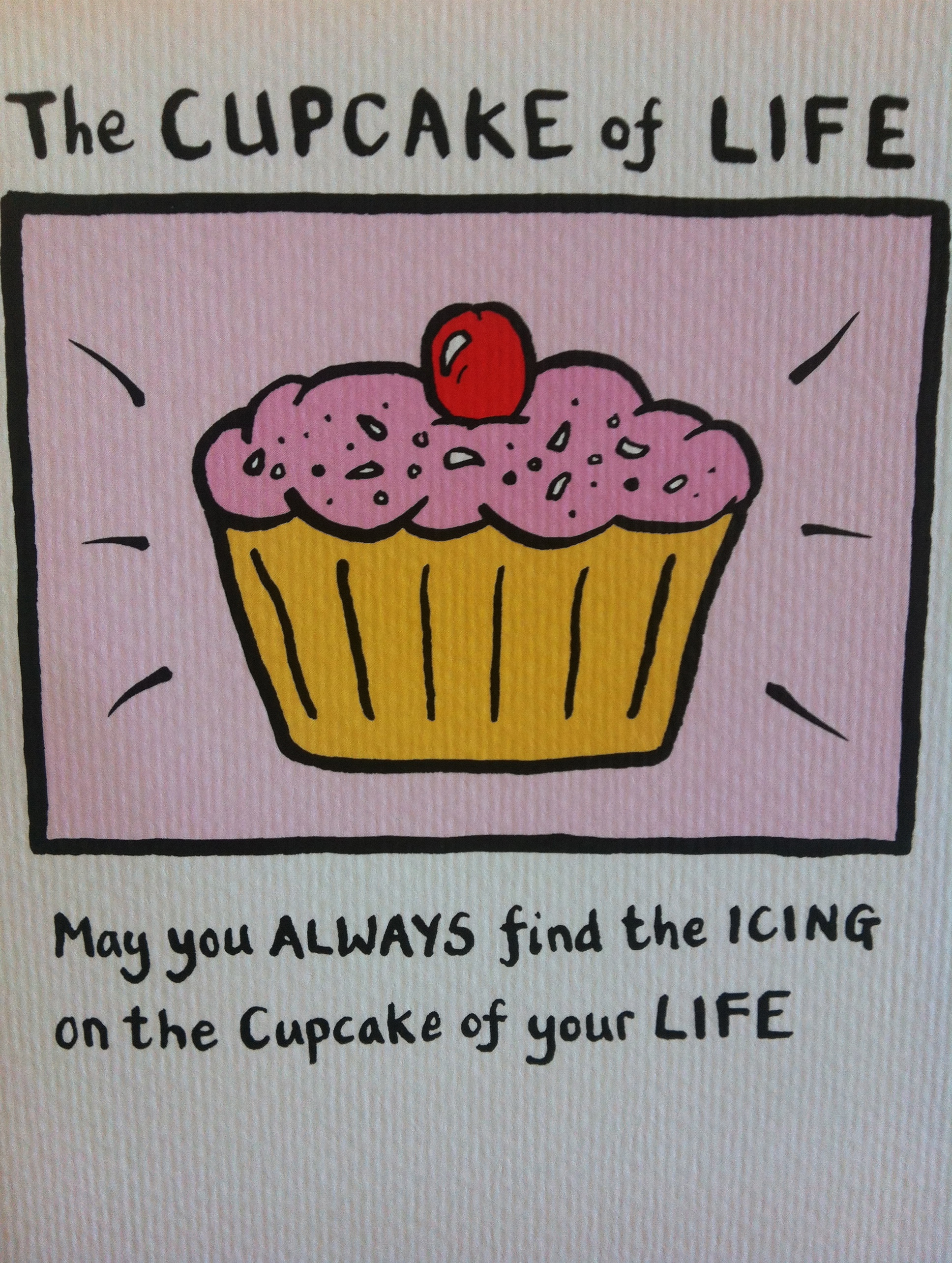
An Edward Monkton card that really spoke to me

An Edward Monkton card that spoke to me

It seems I’ve spent a long time searching far and wide for a sense of wholeness – but maybe I didn’t need to look beyond my kitchen. I’m not expecting miracles or any major turnaround, but I’m looking forward to enjoying some of life’s simple pleasures and sharing them with others.

Before signing off and on a separate, if loosely related topic, I wanted to highlight a radio interview that eloquently and powerfully describes the pain a lot of women who want to be mothers go through when they realise they can’t have children for whatever reason. I’ve mentioned Jody Day and her organisation Gateway Women that supports childless-by-circumstance women a few times on this blog before. Jody’s interview with Radio Gorgeous about her experience of childlessness and why she set up GW starts around the 22-minute mark. Enjoy.

And if you have time on your hands (two minutes exactly), check out the podcast I made for the Radio 2 Pause for Thought competition. They were searching for a new voice. They didn’t choose mine. But I really enjoyed the process of making the podcast, which I’m calling Be Still And Know That I Am God.

Posted in Addiction, Body Image, Childless, Dating, Eating disorders, Faith, Happiness, Infertility, Recovery, Relationships, Self-Acceptance, Spirituality, Women | Tagged , , , , , , , , , , | 3 Comments

A life that matters

What would you do if you believed your life really mattered?

I asked myself this the other day while sat on a striped deckchair outside Foyles bookshop on London’s vibrant South Bank. It was early evening and I’d nipped into the store to buy a couple of novels – I was feeling a little blue (more about the reasons for that in a future post when I’m more ready to write about it) and was trying to practice as much self-care and self-love as possible. I thought a couple of works of fiction – bought after browsing the shelves of an actual book shop rather than clicking on an Internet link and waiting for a brown cardboard package to land on the doormat – would do me the world of good.

I’ve started with The Unlikely Pilgrimage of Harold Fry, which I’ve wanted to read for ages, and I’m already loving it. In fact, I’ve already got that feeling that I don’t want it to end and I’m not even a quarter of the way through.

Before opening Harold, however, I sat on my striped deckchair reading The Little Book of Confidence by Susan Jeffers. It’s one of those handbag-sized books they place at the till, knowing that in the few minutes it takes to complete a transaction, you’ve probably flicked through a couple of pages and decided it’s worth an extra three pounds. In this case, I bought it for a friend who I was about to meet for dinner (doing something for others is a great tonic when you’re feeling blue and a little self-obsessed, I always find, it gets you out of your own head). But they didn’t have any gift paper to hand, which meant I could have a glance at its contents before giving it away.

I was struck by a lot of what Jeffers wrote – I read her Feel the Fear and Do It Anyway a number of years ago – and although The Little Book of Confidence is a little simplistic in places, I found it powerful and very relevant.

Here are a few of the passages that caught my eye:

“Life is always bringing us new adventures. New challenges arise involving career moves; relationships end and so on. But if you have given 100 percent, when the time comes to move on, you have nothing to regret.”

Giving 100 percent, I guess, is the opposite of ambivalence, which is something I struggle with and a topic I blogged about in a previous post. It’s particularly relevant to my book – The Baby Gap. Sometimes, I feel it’d be so easy not to write it, to give up, to move on to something else. But I’m pretty sure this would leave me with deep regret and I’m just as confident that if I give it 100 percent and it doesn’t work out – it doesn’t get published or it doesn’t sell many copies – I’ll feel a lot happier in myself and will be able to congratulate myself for giving it my all. The same goes for relationships, but more about that another day.

Jeffers says “knowing that you count and 100 percent commitment are the magic duo“. She suggests we ask ourselves what we would be doing in each area of our lives – say personal growth, relationship, career, family, spiritual growth, contribution to the community, alone time and play time – if we believed we really counted. It’s a great question. And a challenging one. And the answers will be different for all of us.

As I sat on the deckchair outside Foyles, I tried to come up with some of my own answers. What would I do if I believed I really counted? Well, I would love and be loved, write, use my gifts and talents to bring joy to myself and to be of service to others, grow, experience and appreciate the beauty of the world and its people, do my best to touch people’s lives and to be open to be touched by the lives of others. I would walk through my fears, take leaps of faith, worry less, try to have fewer regrets and seize life’s opportunities with an open heart and as much enthusiasm as I could muster. Jeffers suggests we “interpret inappropriate fears as a green light to move ahead, an opportunity to grow and live life more fully – instead of as a signal to retreat“.

I would also love, cherish, nurture and care for myself more. I would commit to nurturing, stretching and strengthening exercise and activities that make my heart sing and bring me peace, from swimming in the sea to meditating in the sunshine. I would speak up more – in a measured, thoughtful way – I would be more honest (with myself and others), less afraid of confrontation and other people’s anger. I would give more (Jeffers writes that “when giving is about getting, fear is created. Give with an open heart with nothing expected and peace reigns“. And I would accept myself more, since this is the way to learn to accept others.

Which takes me to a meditation I heard this morning. I’ve been doing the 21-day meditation challenge led by Deepak Chopra and while I haven’t loved all of it and haven’t been hugely diligent with my meditation, I particularly liked this morning’s message: The world is my mirror.

We are all mirrors of each other and we see ourselves in others in relationships, particularly the most intimate of relationships. If you’re like me and you struggle with self-acceptance and are prone to self-criticism, it’ll be the things you most dislike about yourself that you see so clearly and most want to change in others. It can be a painful realisation but, as Deepak says, one that becomes a tool for the evolution of our consciousness. In other words, it helps us grow. I’ll end with a quotation Deepak read this morning that particularly moved me:

The good you find in others, is in you too.
The faults you find in others, are your faults as well.
After all, to recognize something you must know it.
The possibilities you see in others, are possible for you as well.
The beauty you see around you, is your beauty.
The world around you is a reflection, a mirror
showing you the person you are.
To change your world, you must change yourself.
To blame and complain will only make matters worse.
Whatever you care about, is your responsibility.
What you see in others, shows you yourself.
See the best in others, and you will be your best.
Give to others, and you give to yourself.
Appreciate beauty, and you will be beautiful.
Admire creativity, and you will be creative.
Love, and you will be loved.
Seek to understand, and you will be understood.
Listen, and your voice will be heard.
Show your best face to the mirror, and you’ll be happy
With the face looking back at you.

– Unknown

Posted in Faith, Love, Relationships, Self-Acceptance, Spirituality | Tagged , , , , , , , , , | 1 Comment

The answer is spiritual

At the end of my yoga workout at home this morning – done to a lovely DVD a friend put me on to, Ali MacGraw, Yoga, Mind & Body – a definition of Namaste (the salutation often spoken in a yoga class) appeared on the screen that I hadn’t heard before: “The God in me salutes the God in you”.

I’ve been dropping in and out of yoga classes for a few years now and joining in when the teacher and pupils say Namaste, but I think it’s the first time I’ve heard that definition. Or perhaps I’d heard it before but had forgotten. Whatever the case, it’s fitting that I should be reminded of it this morning, just as I was preparing to write this blog.

I scribbled an outline to this post in a notebook just before bed last night. This happens on occasion – sometimes I’m suddenly inspired to write and I have to get the words down before I forget. On this occasion, I think I was inspired because I’d had one of those days that had left me feeling content, peaceful, in touch with my spirit, connected to others and proud of myself.

I’d done a 30-minute workout in the morning – not yoga this time but some hand weights, sit-ups, cardio and stretches, followed by a bit of Pilates and then 10 minutes of meditation, rounded off with a healthy breakfast. I’d then done a full day’s editing, called a family member at lunchtime who I hadn’t spoken to in a while and who I imagined would be very happy to hear from me and who needed a bit of support, submitted a long-overdue blog post on perseverance to JustCharlee, the Canadian women’s lifestyle site I write for (it’s not published yet but earlier posts are here) and, after work, got myself to an outdoor pool for a swim in the last of the evening sun. After dinner, I left a message for a friend who also needed some support, had a nice chat with The Guy (that’s the one I mentioned in the previous post) and took myself to bed at a reasonable time to write in my notebook and flick through the pages of a vegetarian cookbook to find something nice to cook for a friend this evening. Eight hours of peaceful sleep followed.

In many ways, it was a pretty uneventful day, but one in which I got in touch with my spirit, my body, Nature, God and other people. And that’s what led me to the title of this post – the answer is spiritual. 

If I’m looking for peace, for a way to lead a contented, happy existence, the best way to go about it, it seems, is to connect with my own spirit – the God-given spirit inside me – and with the earth, with Nature and with others – with the God-given spirit inside my fellows.

I can do this by putting to good use some of my natural gifts and talents (writing being one of them, I believe; compassion, understanding and empathy being others, perhaps); by getting in touch with my body, feeling its strength and its internal spirit, through exercise, stretching, breathing and meditation; with God, through prayer or simple chit-chat; with Nature, by being outdoors, standing on grass, swimming in an outdoor pool with the sky above me and leaves floating on the water, feeling the wind or being rained on (even if I get wet); and with other people, by connecting with them, preferably in person but if not, on the phone.

If I can do some or all of those things, I think I’m in for a good day.

Of course, it’s all too easy for me to cut myself off from this spirit – by being too busy, by not connecting with myself, God or others, by not putting my talents to good use, by not spending time in Nature and not exercising my body, by living in my own head, over-thinking and over-analysing, or by spending too much time on the computer, the iPhone or watching TV.

Technology, I reckon, all too often breaks this spirit-to-spirit connection. How many opportunities to chat to people have been wasted because we’ve sat on a train staring at our phones? How many chances to connect with strangers have passed us by because we’ve followed Google Maps to get to our destination rather than ask for directions? (I’m a big fan of asking for directions and also seem to be one of those people who always gets asked, even if I’m a tourist in an unfamiliar place – I must look like I know where I’m going!). And how many hours have we missed out on exercising our bodies, enjoying Nature or stilling our minds in meditation because we’ve been glued to a computer or TV screen?

The good news is – as I’ve discovered recently – it takes just a small amount of effort to get back in touch with this spirit: doing something we love, something that makes our heart and spirit sing, or putting our gifts to good use; going for an outdoors swim, a stroll or a bike ride; sitting still for 10 minutes and focusing on our breathing; or spending time connecting with friends, family members or strangers.

And I have to say after a few weeks of trying to do a bit of exercise most mornings – either yoga or a workout – and meditating for at least 10 minutes most days, I feel much more peaceful, in touch with my spirit, and connected to the world and the people around me.

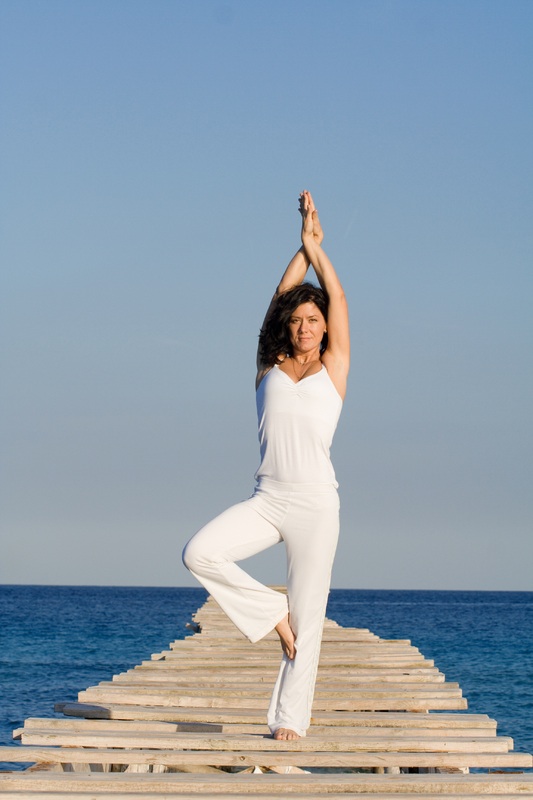
The tree pose - I'm getting there, in my own time

The tree pose – I’m getting there, in my own time

My body and mind feel lighter, my legs and my core feel stronger (I can stand in tree pose without wobbling too much) and I feel like there’s a solution to my poor posture and my lower back pain, even if I’m not quite there yet.

I’m more peaceful, more content, more tolerant and accepting of myself and of others and more open to love and life.

In short, I’m a long way from the person who pondered taking anti-depressants last Autumn and a very long way from the woman who used to binge eat and binge drink, starve, punish herself with exercise or endless work and harm herself in other ways. Yes, I’ve come a long way since those days.

Now, I realise that all this talk of meditation, God and getting in touch with one’s inner spirit may not be for everyone. We all approach life differently and have our own ways of making sense of the world – while some are fortunate enough not to think too much about it.

But I believe those of us who are looking for meaning can find a way to connect with something that gives us that. This could be anything from that sense of fulfillment we get from discovering and using our natural gifts to the joy we feel when we’re free-wheeling downhill on a bike to that feeling of connection we have when we’re with someone we love.

I’m also aware that not everyone has the same amount of time on their hands to meditate and exercise that I seem to have right now, particularly those of you with young children. But I imagine, amongst all the exhaustion and frustration, young children offer an amazing opportunity for that spirit-to-spirit connection and for love and joy. (And given the choice, I’d rather have the child than the hour to do yoga, although I’d love to have both!).

No matter our schedules or circumstances, however, there’s one thing we all have in common and that’s the fact that we breathe. Sometimes I find just listening to my breath, for a few minutes at the start or in the middle of the day, is reassurance enough that everything – in that particular moment – is exactly as it should be and that I have everything I need to find my way in this world.

Last night, I scribbled these words in my notebook: if I stay in touch with my spirit, with God and with Nature, I know I’ll find my way. If I use my gifts, I know I’ll find my way. And if I connect with others, I know I’ll find my way.

And then this morning, I heard this Anne Frank quote on the radio, which seemed quite fitting given what I planned to blog about: “The best remedy for those who are afraid, lonely or unhappy is to go outside, somewhere where they can be quiet, alone with the Heavens, Nature and God. Because only then does one feel that all is as it should be.”

Postscript: I’ve been reminded recently that it’s good to do something every day that frightens us a little or challenges us. It’s pretty much guaranteed to build our self-confidence and raise our self-esteem. I don’t always adhere to it myself but on the days I do, my spirits are lifted.

Posted in Faith, Happiness, Health, Love, Self-Acceptance, Spirituality, Women, yoga | Tagged , , , , , , , , , , , , , , | Leave a comment

Ambivalence

It’s been so long since I’ve posted on this blog that I almost feel I’ve lost my nerve, lost my ability to write my truth. Maybe the act of writing one’s truth is like a muscle. The more you use it the stronger it gets, but if you don’t exercise it, it goes weak. I feel like I’ve come over all self-conscious, all cautious about sharing my feelings. But I’m sure I can get my boldness back.

I’ve actually drafted two posts in the past five weeks but didn’t publish either of them. One needed rethinking (more about that later). And my perfectionism and procrastination – and perhaps my ambivalence (more about that later too) – got the better of me with the second. This blog is a mash up of those two (love that phrase ‘mash up’).

Quite a lot has happened since I last posted – a camping trip to wet Wales, a visit to sunny Barcelona, a heatwave in Britain, nine rejections, albeit very complimentary ones, from top publishers for my book – but perhaps the main thing to report is that I’ve started dating. Not online dating or going on dates with a number of people to check them out, which I had been doing. But dating one person. Giving a relationship a shot.

Maybe that’s why I’ve gone all shy. This is unfamiliar territory. I haven’t been here for a while. Or maybe I’ve never been here. Because I think I start every relationship as a different person in many respects – as someone who’s learned from her past experiences, someone who’s grown, someone who’s got to know herself a little better, someone who’s more willing to try things out and someone who’s progressively more capable of having a relationship (at least I hope so, otherwise I want my therapy money back!). But despite all that, it still feels like an emotional minefield.

I guess my absence from this site and my decision not to post previous drafts has something to do with the fact the person I’m dating has been a long-standing follower of this blog and therefore I imagine he’s reading. So I now have a bit of a balancing act to perform – to write my truth as I’ve been doing for the past two years, but not to use this space to try to manipulate him in any way through what I share here or to say things that I’m too afraid to speak out. That’s one of the reasons I didn’t press ‘send’ on my first draft post – somehow, very subtly, I think there was an intention to manipulate and to share more than I wanted to face-to-face. I had an agenda. And I want to be mindful of that.

So, the fact I’m dating someone, attempting a relationship, is pretty big news. But the even bigger news is that I’m telling you about it. Blogging about it. Posting it on the Internet in indelible ink.

Why is this big news? The answer is ambivalence.

As many of my close friends will know (since they’ve often been on the receiving end of panicked phone calls when I’ve had to make a decision – about holiday destinations, times of flights, boyfriends, purchases of shoes, tents, bicycles, the list goes on) I often struggle to commit to a particular course of action. Turkey or Spain for my yoga break? The brown or the black boots (perhaps I can afford both)? Should I date the guy or not?

My long-suffering friends have heard my endless musings over the years and witnessed my paralysis when faced with choices. And then, once I’ve made a decision, they’ve also been subjected to my second-guessing – Spain would have been warmer and cheaper. The black boots would go with more things. The tent’s too small. And what about that other guy?

In my world, the proverbial grass is pretty much always greener.

I’ve blogged about decision-making before. In Decision fatigue?, I wrote about how choosing one thing over another evokes a sense of loss – when we take a particular course of action, we’re literally killing off the other option. And for those who’ve had a lot of loss in their lives or who come from a place where there was very little (love, money, treats etc), this can be challenging.

Ambivalence, in many ways, is very similar to indecision but I think it runs deeper.

Ambivalence is defined as ‘a continual fluctuation (as between one thing and its opposite)’ or ‘uncertainty as to which approach to follow’. But it’s also ‘simultaneous and contradictory attitudes or feelings (such as attraction and repulsion) toward an object, person, or action’.

I’ve struggled a lot with ambivalence over the years but perhaps I wasn’t aware until now how debilitating it has been. I can look back on my distant and recent past – via my memory or this blog – and uncover moments of chronic ambivalence that sapped my energy and stole some of my joy. Take my Mexico trip – I was torn about going (adventure in a faraway land versus cosy, safe Christmas with the family); torn about renting my flat out (the much-needed income versus the prospect of damage and the need to clean and declutter); torn about where to spend Christmas (a Mexican beach or a Mexican city) and how to get there (plane or bus) and where to stay (backpackers versus smart hotel); and I was torn about staying on longer in Mexico or coming home, so much so that I wasted a whole morning ruminating, weighing the pros and cons of each course of action and, yes, making a panicked Skype call to one of those long-suffering friends back home.

In one way, then, I was quite heartened when my therapist suggested recently that my ambivalence could be yet another form of addiction. A compulsive behaviour. An avoidance or displacement tactic. Something – just like the compulsion to overeat or overwork – that takes me away from feeling my feelings. Something I’m hooked into and powerless over (powerless in the sense that fighting it won’t work. I need to accept it, surrender to it and thereby diffuse its power over me, just like with the overeating).

I was also heartened to read that ambivalence derives from the Latin ambi, meaning both or two ways, and valentia meaning strength. This surprised me initially. I think I’d associated ambivalence with a certain wishy-washyness, an indifference, apathy, or inertia. And I’ve definitely felt apathy or inertia towards certain things in the past.

But what I’m more familiar with is a really strong pull in two or more directions. I can be literally torn, split down the middle and it’s an intense, painful and energy-sapping experience. As those long-suffering friends have often remarked, “I’m exhausted just listening to you”.

My ambivalence has caused me distress and has wasted a lot of time. But if I can understand where it comes from and see it as a compulsive pattern of behaviour, perhaps it will lose its hold over me.

It seems I may have internalised ambivalence – it’s become part of my inner workings – because I grew up with a good amount of it: parents who were sometimes there, physically and emotionally, but other times not; who were at times incredibly loving, giving, supportive and proud, but at other times were overwhelmed with their own lives or issues, distant, or unable to give me the love and support I needed. I was on the receiving end of a ‘push-pull’ set of emotions – a sense of ‘I want you, but I don’t want you’, ‘we think you’re special versus we don’t have time for you’).

For a child, this can be very confusing, but this is the way I experienced an important part of my childhood world and this is the way I often experience the world as an adult.

And because I experienced this ambivalence in close relationships, that’s where it manifests itself most strongly today. Particularly in romantic relationships. Particularly where emotional intimacy is on offer. I’m familiar with that sense of push-pull, the feeling of ‘I want you but I don’t want you’. I have sometimes chosen to date people who behave that way towards me – because I’m drawn to repeat my past and recreate my childhood, in the hope it will work out differently this time around. And I’ve behaved that way towards men. These conflicting emotions, the feelings of push-pull and the pattern of attraction and repulsion can be mightily unsettling if you don’t know where they come from.

It also comes much more naturally to me in relationships to have one foot in and the other out, perhaps wedging the door open, rather than two feet in. It comes much more naturally to me to retreat from intimacy rather than to embrace it. And it comes much more naturally to keep my options open rather than to commit.

There it is. The C word – commitment. Even writing it makes me feel a little nervous. Because I guess commitment is the opposite of ambivalence, and even an antidote to it – it’s choosing one path and sticking to it. (I’ve written about Commitment and Phobia on this blog before, in case you’re looking for more on the topic).

So, today, I am making a concerted effort to commit to a relationship, to give it a shot and to work through my feelings every time I feel pulled in the opposite direction. Is there ambivalence? Of course there is. It’s only natural given my internal make-up. But I owe it to myself to explore whether this ambivalence belongs to my past or to my present – in other words, if it’s a self-sabotaging, dysfunctional coping mechanism that’s rooted in childhood experiences, or if it’s my intuition tapping me on the shoulder.

And I can only know that if I allow time for things to develop. Jumping ship at the first sign of a problem would be counterproductive. It’d be like moving countries in search of happiness, only to find you take your unhappy self with you – known as ‘doing a geographical’. Or switching jobs because you’re afraid to stand up to your boss – only to find you’re equally afraid to stand up to the next boss.

Relationships, at least for complex characters, will throw up their fair share of challenges and push childhood buttons. But, as has been said, they are also a place for healing. Much of our hurt happens in relationship and that’s where the healing is too – apparently.

I’m also hoping this new awareness of my internalised ambivalence will make it easier to make decisions in other areas of my life. I’m very good at starting projects or signing up to things and losing interest in them. I’m still working on my book but I’ve had some moments of real inertia and apathy around it, followed by bursts of energy and motivation. I signed up to a pop choir but missed a few rehearsals, didn’t learn my lines properly and almost bailed out of one of the end-of-term concerts (it was hot, I was tired etc). In the end, I sang in both performances, seemed to know my lines OK and thoroughly enjoyed the experience.

I view commitment – sticking to a course of action – as one of those grown-up traits I’ve always really struggled with. But, as I discovered with the choir, it takes commitment to get real enjoyment out of things, to feel part of things and to get close to people. I can sit on the fringes, of a choir, of a relationship, of my life and feel separate and lonely, or I can throw myself in and see what happens.

How does this feel? Terrifying at times. But it also feels like something those mature, grown-up people do. Perhaps, at 42, I’m getting there.

Posted in Addiction, codependency, Dating, Love, Relationships, Uncategorized, Women | Tagged , , , , , , , , , , , , | 7 Comments

Feel the pain, but do it anyway

Despite having a comprehensive record of my thoughts, feelings, fears, decisions and activities over the past two and a bit years on this blog – a record that very clearly shows what’s good for me, what works for me and what doesn’t – I still struggle to put what I’ve learned into practice.

Procrastination is a case in point. Putting things off isn’t good for me. It does very little for me. In fact, it drags me down, makes me anxious, makes me angry with myself and takes up a lot of time that could be better spent enjoying my life. The things I’m procrastinating over sit on my shoulders like a heavy weight, producing tension, siphoning my energy and preventing me from moving freely.

I’d been pondering my procrastination in relation to a number of things – getting on with my writing, booking a trip to Spain, getting myself regularly to yoga and Pilates, to name but a few – when a friend sent me a link to a post that really resonated with me: The Real Reason We Procrastinate (And What To Do About It), written by Phil Stutz, a psychiatrist, and Barry Michels, a psychotherapist. Together they wrote the book The TOOLS: 5 tools to help you find courage, creativity, and willpower and inspire you to live life in forward motion (which I’d order right now if I didn’t already have a number of similar titles sitting unread on my book shelves and if I wasn’t aware that reading books about procrastination is a classic procrastination technique – but it looks really good so I might still get it anyway!).

If you can relate to procrastination, I’d recommend reading their post in full, but if that’s going to take up too much time – and stop you from doing the things you really want to be getting on with today – then here’s a brief summary and some of my own thoughts on it.

Stutz and Michels say we avoid tasks because they will cause us a certain amount of emotional pain – perhaps we’ll feel fear, vulnerability or shame, perhaps we’ll feel rejected or unloved.

For example, we put off making a phone call to a friend to explain we can’t make their party/picnic/wedding/christening etc because we know we’ll be exposing ourselves to pain – to potential disapproval, rejection or anger. It’s uncomfortable. Similarly, we don’t ask for a raise or apply for a new job or ask for time off work – the potential for pain is there too.

To use some examples from my own life, I put off going to yoga or Pilates because I’m not brilliant at either – stretching has never been my strong point – and I know I’m going to find the classes tough at first. I’d rather run or cycle, even though what my body really needs is to stretch. By not going, I’m avoiding physical and emotional pain.

Or I put off nailing the dates and buying the flights for that trip to Spain I’ve been talking about for the last few months. Why? On the one hand, I know it’ll be really good for me. I love Spain, I come alive when I’m speaking the language and I’m longing to spend some time in a foreign country, particularly a warm, Mediterranean one. But booking the trip also comes with a certain degree of pain – the fear of getting it wrong (because I always think I have to get things 100 percent right), of choosing the wrong dates and flights, of wishing I was at home rather than there, of feeling lonely, of not sleeping and so forth (as I write this, my fears seem rather minor compared to the lure of the Mediterranean!).

I had a similar experience before my month-long Mexico trip at Christmas, before booking my flights and even after I’d booked my ticket. I felt pain. I had moments when I didn’t want to go, when I thought I’d got it all wrong. And when I was there, I also felt pain – loneliness and fear – at times.

But by going to Mexico and travelling around there I did what Stutz and Michels advocate in their post and their book: I moved towards the fear. I took it on. I confronted it. I bought my flights and went to my friend’s wedding in stunning Acapulco. And once I was back in the capital, I dried my tears after days of indecision about where to spend Christmas – given my friends wouldn’t be around – and I booked a flight to the beach. And as I faced my fears, the universe or God (however you prefer to see it) responded.

I found someone to rent my flat in London (alleviating some of my financial worries), I made some amazing new friends, I danced salsa, learned to surf and had a lovely holiday romance. And when I got back, a magazine editor read my blog about the trip and commissioned a feature – perhaps the nicest, most stress-free commission I’ve ever received.

In other words, I moved towards the fear and doors opened, without me having to force my way through them. This is what Stutz and Michels call “living in forward motion”.

The opposite of living in forward motion is staying stuck in our comfort zone, in a pattern of avoidant behaviours. But staying in our comfort zone comes with its own pain, to quote Stutz and Michels:

It’s a shrunken world where ideas, opportunities, and new relationships can easily pass us by. Worst of all, procrastinators squander the most precious asset a human can have: time.

That’s why, in the words of Henry David Thoreau, most people “live lives of quiet desperation and die with their song unsung.” We want you to sing your song before you die.

I love that last line: “we want you to sing your song before you die”. I want to sing my song before I die. Don’t you?

As we live in forward motion, the universe brings us opportunities – people, places, things – that we never could have imagined. We encounter the wonder and beauty of serendipity, but only because we decided to step out on the windy path in the first place.

Of course, it takes courage and effort to live life in forward motion. Stutz and Michels offer a technique involving visualising the pain as a black cloud and then moving through it. Is it really that simple? I’m happy to give it a go. But I also think that just by recognising that we procrastinate because we’re afraid of feeling pain might be enough to propel us forward. I, for one, feel quite encouraged by reading their post.

I was also heartened to read that Stutz and Michels work in Los Angeles and come across lots of highly creative people:

Do you know when these people display the highest degree of creativity? It’s not when they perform, write, or sing; it’s when they make up excuses to postpone doing the things they should — even when those things are crucial to their future. 

Extremely creative people, to make a sweeping generalisation (please forgive me), are perhaps more sensitive than others and therefore more susceptible to feeling pain and vulnerability. So it follows that creative types would also be more prone to procrastinate, which is certainly my experience, from my own life and after mixing with a lot of creative people in recent years. But then when creative people get their act together, the results can be astonishing.

But I also imagine our desire to avoid pain is linked to how much pain we recall or we carry in our subconscious from our childhoods or our past. If we felt unsafe, vulnerable, scared or unloved or if we were met with anger or disapproval when we took emotional or creative risks, then it’s not surprising we’ll want to keep ourselves wrapped in comfortable, cosy, cotton wool.

And if, at a young age, we developed addictive behaviours to cope with that pain – eating, drinking, drug taking, gambling, sex, obsessive thinking etc – we’ll be even less equipped to deal with our pain and therefore more terrified of it. Is it any surprise that creative people often struggle with addiction and with procrastination (another generalisation, but still)?

That’s why I feel very blessed to have found recovery from addiction and to be in therapy – I buried a lot of emotional pain and did my utmost over the years to avoid feeling any more of it and I need help to move forward in my life.

In fact, I need all the help I can get. And one thing that works for procrastinators – which I’m not taking advantage of right now – is having an accountability partner, someone who shares our struggles, can empathise with them but can gently nudge us in the right direction. This can be a friend, a fellow procrastinator, a life coach or perhaps a therapist. I know many people who have felt the benefits of being accountable to someone and I’d like that for myself. Perhaps that’s also why partnerships (professional and personal/romantic) can be so good for people. We can encourage each other, cheer each other on. When one feels weak, with a bit of luck the other will be feeling strong.

Stutz and Michels say our lives can change profoundly if we get into the habit of moving toward the pain all the time. We’re more able to take emotional and creative risks.

I hope that by visualising the pain I’m trying to avoid and by breaking through it, I can live life in forward motion and sing my song before it’s too late. And I have the same hope for you.


Posted in Addiction, Creativity, Eating disorders, Faith, Recovery, Women | Tagged , , , , , , , , | 2 Comments

This is it

Here’s one I prepared earlier … and edited and uploaded once I got online …

I’m writing this from a bed on a ward at University College Hospital in London. I came in via A&E for a brain scan and to see a neurologist and ended up staying overnight – and no, I’m not joking.

I had a restless night (although not as restless as I’d expected), made friends with some lovely fellow patients, marvelled at how pleasant and caring most of the staff were and felt a lot of empathy for the elderly, Greek lady opposite who fell out of bed a few times in the night because she was determined to go to the toilet on her own.

What was I doing here? I’d been getting some pretty weird headaches over the past few weeks and my GP sent me to A&E yesterday morning, thinking my symptoms warranted further investigation and that it was unwise to wait a month for an outpatients’ appointment with a neurologist.

I’m pleased to say the scan showed nothing sinister – the neurologist couldn’t find any signs of a stroke or a bleed (which is what we’d all been worried about). And as much as I’d rather not have sat in hospital on a beautifully sunny day or spent the night on a noisy ward, I’m really pleased the doctors scanned my brain, took the time to check I’m OK and that I pressed for a second opinion from a brain expert rather than the ward doctor who failed to reassure me. It’s at times like these that I think the NHS – with all its faults – is an amazing institution.

Perhaps I was a little over anxious and over cautious but, as you may have guessed, that’s my nature and my brain is pretty important to me so I didn’t want to take any risks. I did manage to stay calm, however, aside from a moment on the cycle ride down here when my fear got the better of me and I started to think panicky thoughts. But I talked myself down and carried on cycling – gently, so as not to put my brain under too much strain – along north London’s sunny canals to A&E.

I often feel vulnerable and lonely at times of illness in London but although my family is very small and very far away, it’s clear to me that I have an amazing network of fabulous friends in this huge city and beyond and that I’d never be short of someone to call up for help. Thanks to texts, calls, a few visits from a doctor pal who works in the same hospital and wonderful chats with my ward mates, I didn’t feel at all lonely or vulnerable – just grateful that I have my health, despite the odd ailment, and that I’m loved.

That said, I did underestimate the impact a night spent on a hospital ward with very sick people would have on my emotions – I think it would have been best to have spent the second half of Friday (once they’d finally let me out) resting from my ordeal rather than working – but we’ll just have to put that down to my nature too. Feelings are uncomfortable and I’ll often do whatever I can to avoid them – working, eating, keeping busy and so on.

So, now on to the blog I’d been planning to write before I ended up in A&E, although perhaps it’s even more relevant after my momentary health scare. I scribbled most of it in a notebook while sat on a sunny station platform after just missing a train back from the seaside to London earlier this week. It was an incredibly peaceful hour: just me, the birds, the odd train passing, the sun, some paper and a pen. Perfect conditions for creativity. It was the best train I’d ever missed.

As I soaked up the afternoon heat, I pondered the fact that I’ve spent a lot of time over the years waiting for my life to start – planning for that time when everything will be just as I want it to be: when I’ll have a career that fulfils me completely; a long, lean, trim body with no aches or pains; a regular yoga, Pilates and meditation practice and a sense of inner peace; a stable but exciting relationship with an adventurous guy who ticks lots of my boxes; a couple of delightful children; a home with a garden not far from the sea; a wardrobe full of effortlessly stylish clothes and time to sit on the beach and paint landscapes. (Surely that’s not too much to ask?)

I’ve spent a lot of time living in a fantasy future in which I’m half-a-stone lighter, my lower back doesn’t bother me and my ankle is strong and in which I spring out of bed at six every morning and pull on my matching underwear, followed by one of those delightfully soft and chic Sweaty Betty yoga outfits. A future in which I’m a published author, a regular columnist, a satisfied school teacher, a life coach, a motivational speaker or a nutritional therapist – or some perfectly balanced and organised combination of all of those things.

But as a very thoughtful and self-aware fellow patient pointed out last night in one of those delightfully deep conversations you find yourself having with someone you’ve never met before – we bonded over brain scans – that’s a childish or child-like way of thinking. It’s magical thinking.

There isn’t a future where everything is perfect or just as I want it to be. It doesn’t exist. It’s an illusion – an illusion that stops me living in today and for today.

So, THIS IS IT. Life is now. Life is happening every second, with my imperfect body, unpublished book, messy career path, uncertain relationships and clashing underwear.

This is it. And it’s precious. Every moment. Every up and down. Every conversation and interaction with friends and strangers.

So I will endeavour to love this life for what it is today, not for what I imagine it will be in some childish vision of the future. And I will endeavour to love myself for who I am today rather than focus on this fantasy being with a different body shape, different hair, a more established work life, a stable relationship and a more definite idea of where I’m heading.

This doesn’t mean I’ll give up on my hopes and dreams – for a career that satisfies me and is of service to others, for strong relationships and particularly a lasting, romantic one, for a family (in whatever shape or form that might take), for a pain-free body, for health and fitness, inner peace, yoga and meditation and even for matching underwear and a Sweaty Betty lycra outfit.

But I don’t need to hang around for that fantasy life to start. This is it. And I have so much to be grateful for – most importantly (I’m realising after a night on a hospital ward) good health – and so much to enjoy. In fact, it’s becoming increasingly obvious that the only things stopping me from having a wonderful, incredible life are the thoughts that go through my head and tell me it’s all going wrong or it’s not quite as it should be.

This is it. And if it never got any better than this – either that moment when I started this blog sitting on that sunny train platform or when I finished it, sat on a hospital bed with my laptop on my knee, listening to some good tunes on my iPhone and preparing to eat an NHS salad wrapped in cling film – I would be an incredibly fortunate lady.


Posted in Body Image, Health, Perfectionism, Self-Acceptance, Women | Tagged , , , | 3 Comments